







How to Choose a Commercial Back Bar Cooler or Glass Door Beverage Refrigerator
Compare bar coolers, back bar and undercounter designs, beer temperature needs, glass door…
 18:47
18:47 A crowded kitchen slows staff down. Ingredients sit too far from the cook, counters fill up, and valuable floor space disappears. A worktop refrigerator solves these problems by combining a durable preparation surface with refrigerated storage directly below it.
A commercial worktop refrigerator is a compact refrigeration unit with a flat work surface above chilled or frozen storage. It helps kitchens store ingredients near the cooking or preparation station, improve workflow, and use limited space efficiently. Buyers should compare size, temperature range, doors or drawers, ventilation, stainless steel construction, energy use, and cleaning access.
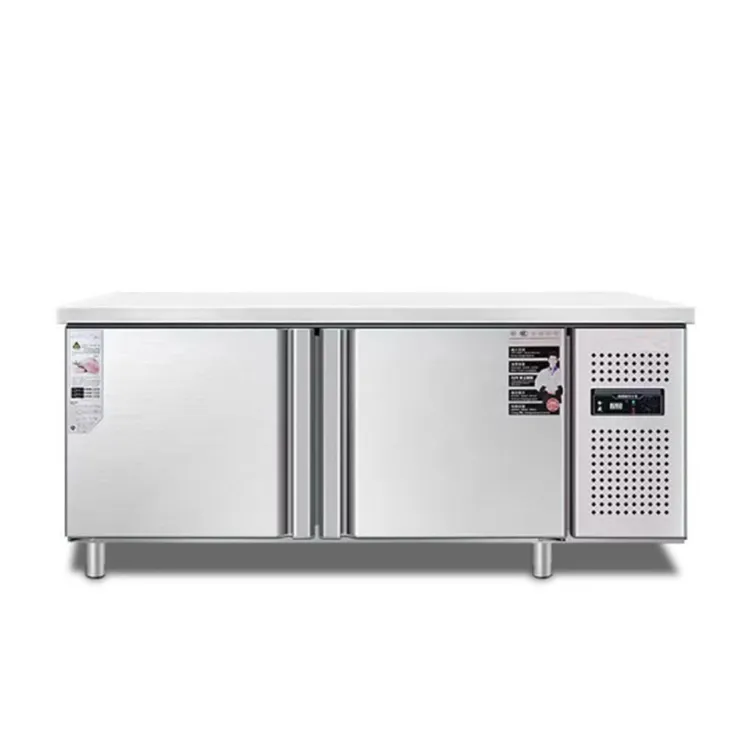
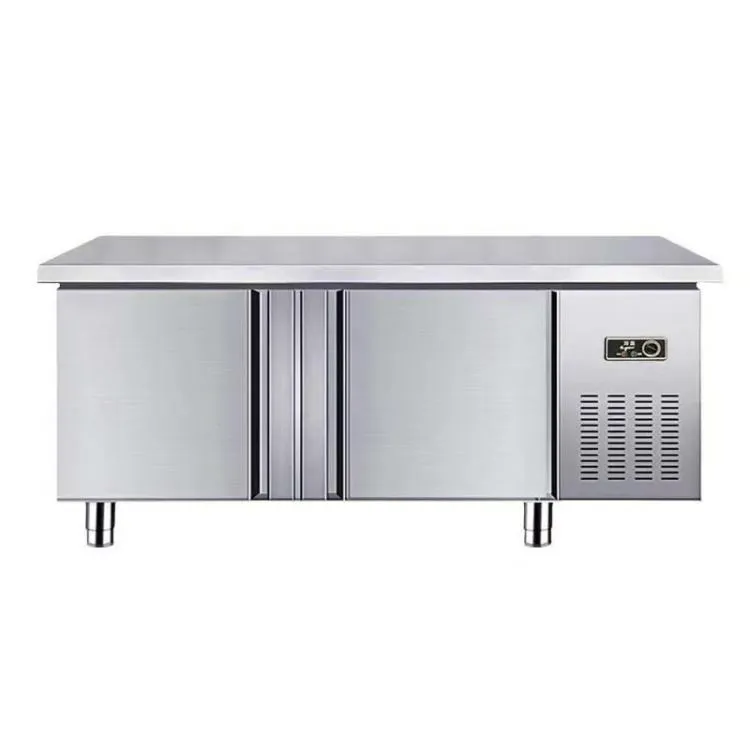
A worktop refrigerator is a low commercial refrigeration cabinet with a usable counter surface on top. Staff can store chilled ingredients below while using the upper surface to arrange plates, prepare simple items, hold small appliances, or support daily kitchen work.
This design gives operators two functions in one footprint:
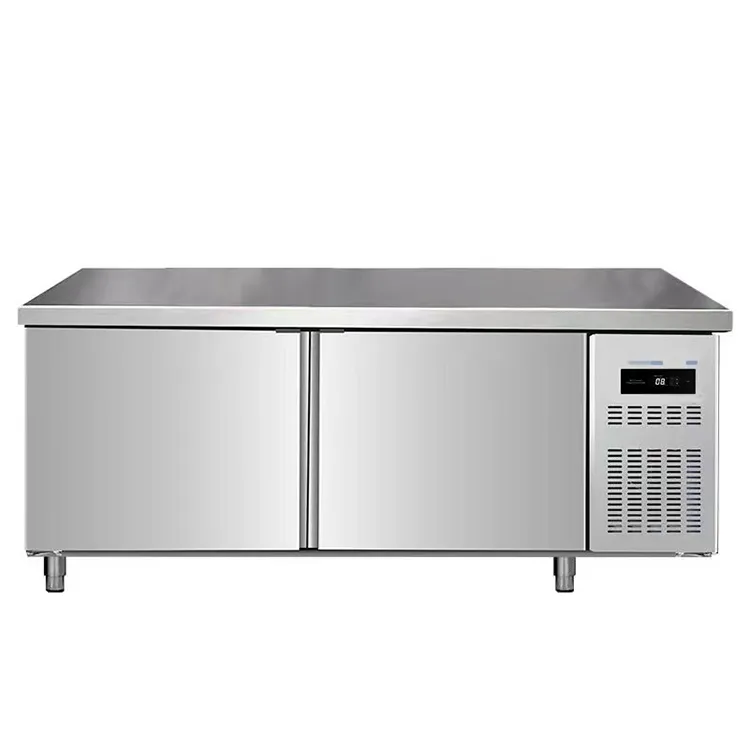
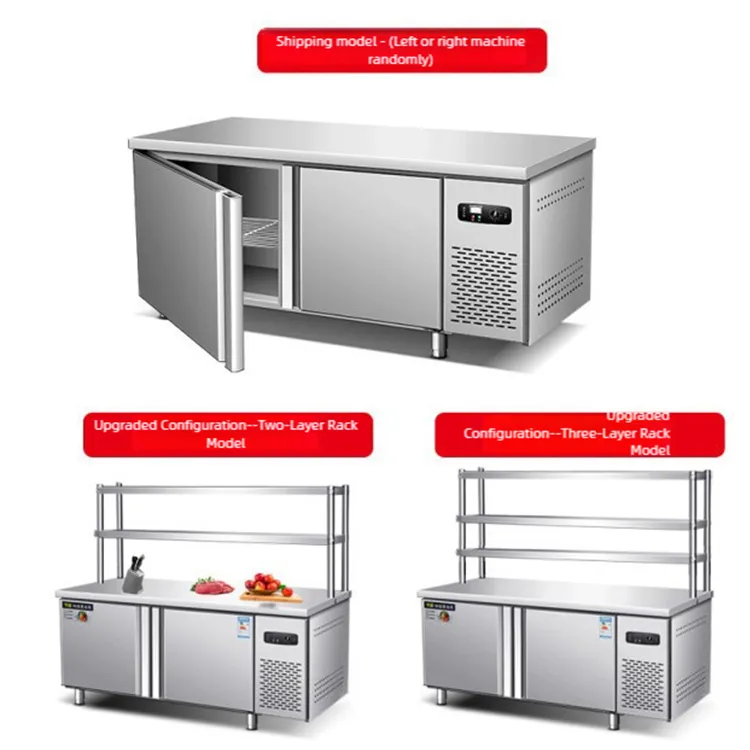
A typical unit stands lower than a full-height reach-in refrigerator. It may have one, two, or three sections with hinged doors or pull-out drawers. The top is usually made from stainless steel, while the cabinet may include adjustable shelves, removable door gaskets, digital controls, and castors.
The U.S. Department of Energy includes undercounter and worktop units within its commercial refrigerator and freezer purchasing guidance. These products are intended for professional food-service settings rather than ordinary household use.
Kitchen efficiency often depends on movement. If a cook must walk several steps to a full-size refrigerator every time an ingredient is needed, those steps add up during a busy shift.
A worktop refrigerator keeps commonly used products close to the workstation. Staff can open a door or drawer, remove the needed item, and continue working. This improves workflow, especially in small kitchens where every movement matters.
Consider a burger station. The cook may need cheese, sauces, cooked toppings, butter, and packaged ingredients throughout the service period. A worktop unit can keep these items below the same counter used for plate assembly.
The same idea applies to:
These products may look similar, but they serve different purposes.
A worktop refrigerator has a reinforced upper surface designed to support general kitchen tasks. It is both a storage cabinet and a working counter.
An undercounter refrigerator focuses mainly on fitting beneath an existing counter. Its top may not be intended as a main prep surface, especially when the unit slides into fitted cabinetry.
A refrigerated prep table usually includes ingredient pans or an upper refrigerated rail. Sandwich shops, pizzerias, salad bars, and quick-service restaurants often use these units because staff need immediate access to open ingredient containers.
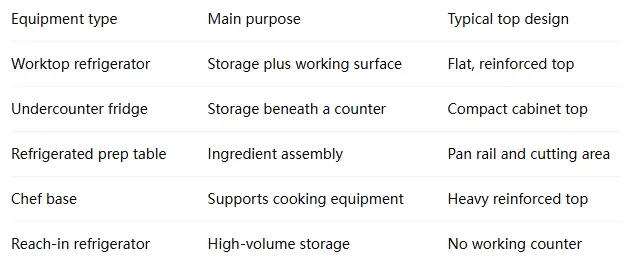
These differences also affect energy-efficiency program eligibility. ENERGY STAR lists undercounter refrigerators among eligible commercial products but excludes certain categories such as chef bases, griddle stands, and prep tables from its commercial refrigerator and freezer specification. Buyers should therefore confirm the exact equipment category before comparing certifications or energy figures.
A countertop or worktop surface should also match its intended use. A normal worktop cabinet may support small equipment or light food preparation, but it should not automatically be used beneath heavy cooking equipment.
Ask the manufacturer about:
Using the wrong product may block airflow, expose the refrigerator to excessive heat, or overload the cabinet structure.
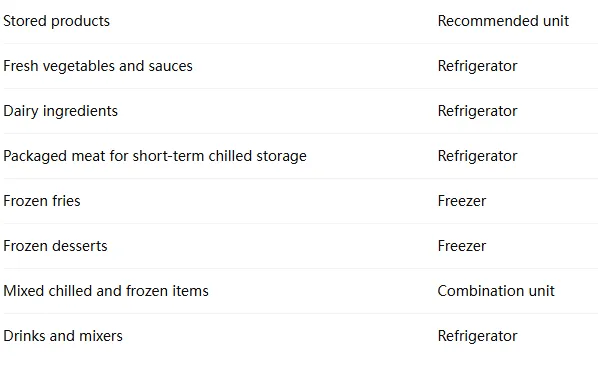
Choose a refrigerator when staff need chilled ingredients close to the workstation. Choose a freezer when the station needs frozen products such as fries, seafood, meat portions, desserts, or prepared items.
Some buyers look for a combined refrigerator and freezer cabinet. This arrangement can be useful, but each section must have a separate cooling design or properly controlled temperature zone.
A simple decision guide is:
Worktop freezers usually face a heavier cooling load because they must maintain much lower internal temperatures. Buyers should compare insulation, compressor capacity, defrost method, ambient-temperature rating, and door-opening recovery.
The cabinet should also match the intended operating environment. A freezer next to fryers, ovens, or grills may need more cooling capacity than the same unit installed in an air-conditioned preparation room.
Questions to ask before choosing
A worktop refrigerator freezer combo may save space, but a combination design should not be selected only because it sounds flexible. Each compartment becomes smaller, and the cooling system may be more complex.
Both arrangements can work well. The right choice depends on package size, staff habits, available aisle space, and how ingredients are organized.
Door worktop refrigerator
A door model usually provides open cabinet space with adjustable shelves. It is useful for larger containers, bottles, cartons, ingredient boxes, and mixed-size products.
Common layouts include:
A two-door model offers balanced capacity for many restaurants. A wider three-section cabinet provides more storage and worktop area but requires additional floor space.
Drawer worktop refrigerator
A drawer configuration gives staff top-down access to pans and containers. Each drawer can hold a separate ingredient group, helping staff keep products organized.
Drawers are often useful when:
Buyers should verify the internal dimensions of every drawer. Outer dimensions do not show which food pans or containers will fit.
Also ask about:
A drawer should move smoothly even when fully loaded. In a busy commercial kitchen, weak slides quickly become a service problem.
The correct size depends on the space available, required storage capacity, menu, staff count, and equipment layout.
Begin by measuring:
A compact worktop can support cafés, kiosks, and food trucks. Larger worktop units may serve restaurants, hotels, institutional kitchens, and central food-service operations.
Common configuration directions
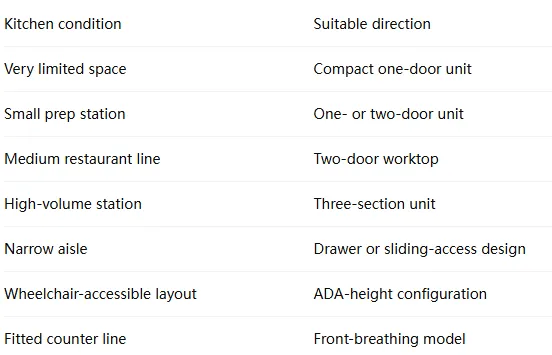
An ADA height worktop refrigerator is lower than many standard units so the work surface can support accessible kitchen designs. However, buyers should confirm the exact local accessibility requirements rather than relying only on the product name.
The top surface must also fit the task. A deep cabinet may offer more cold storage but push ingredients too far from the worker. A very shallow model may save space but limit pan and container depth.
For a food truck, measure more than cabinet dimensions. Vehicle buyers should also consider:
Every centimeter matters in mobile food service.
A worktop cabinet produces heat while removing heat from the stored products. That heat must escape through the condenser area.
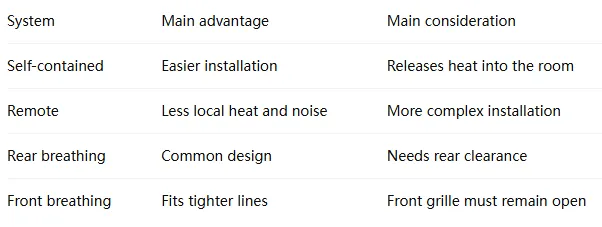
Some units breathe from the front. Others require side or rear clearance. A front breathing worktop refrigerator can fit into a tighter equipment line because it draws in and releases air through the front section.
However, front breathing does not mean the unit can operate with every opening blocked. The grille still needs clear airflow.
A typical refrigeration system contains:
The cabinet may use static or fan-assisted cooling. Forced-air circulation often improves temperature distribution and recovery after frequent access, while the exact choice should match the food, noise requirements, loading method, and cabinet design.
Most compact worktop refrigeration units use a self-contained system. The compressor and condenser sit inside the cabinet body, making installation easier.
A remote system moves part of the refrigeration equipment away from the kitchen. This can reduce heat and noise near staff, but it requires professional installation and suitable site infrastructure.
Place the unit away from direct heat where possible. Fryers, ovens, ranges, and grills can increase the cooling load.
Do not push boxes, cloths, or cleaning tools against ventilation openings. Restricted airflow makes the compressor work harder and may increase temperature or energy use.
A commercial worktop refrigerator can support many professional food-service settings.
Restaurants use worktop fridges beside cooking and plating stations. The cabinet can hold sauces, garnishes, dairy items, prepared ingredients, and packaged products.
Hotel kitchens may use worktop units in breakfast areas, room-service stations, banquet preparation rooms, bars, and satellite kitchens.
A café may refrigerate milk, cream, syrups, sandwich ingredients, and desserts below a preparation surface. Bakeries may use worktop units for fillings, butter, cream, and finishing ingredients.
A food truck needs compact equipment that combines multiple functions. A worktop fridge provides cold storage and a prep surface without using space for two separate products.
Institutional kitchens often value simple controls, durable construction, easy sanitation, stable temperature, and access to spare parts.
Stores that prepare sandwiches, snacks, hot food, or grab-and-go meals can use worktop units in back-room or service-counter areas.
The right configuration depends on the menu and workflow, not only the industry name.
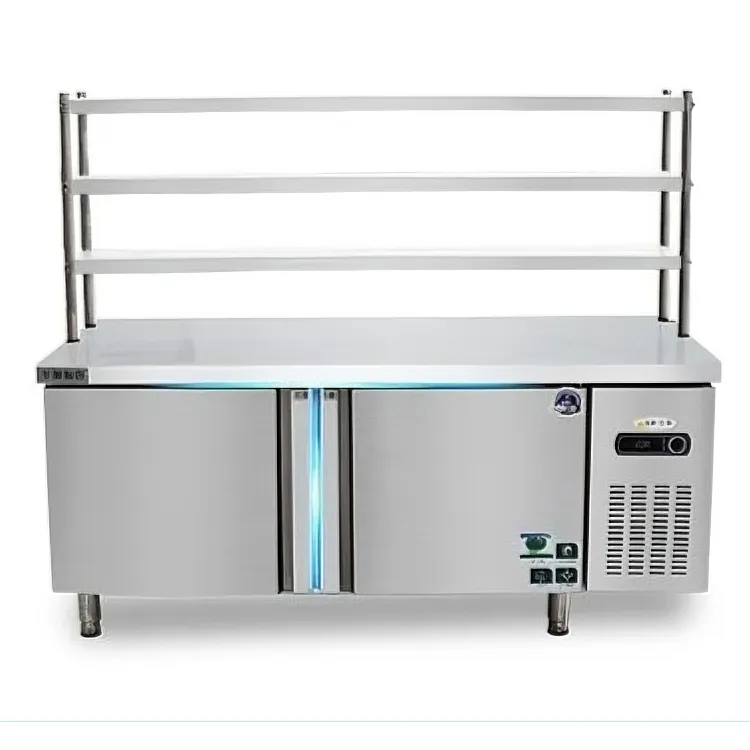
A B2B procurement project includes more than selecting a width and number of doors. Importers, equipment distributors, hotel groups, restaurant chains, kitchen contractors, and public-sector buyers should confirm technical, commercial, and after-sales details.
At Senlisi, we recommend sending a complete application brief.
Include:
Technical questions
Commercial questions
سينليسي is a commercial refrigeration manufacturer and exporter based in Qingdao, China. We provide commercial refrigerators, freezers, display cabinets, and configurable refrigeration solutions for restaurants, supermarkets, food-service operators, hotels, healthcare facilities, retailers, distributors, and institutional projects.
Depending on the model and order requirements, available options may include:
A clear requirement helps us prepare a more accurate product recommendation and quotation.
A worktop refrigerator provides refrigerated storage below a usable preparation or equipment surface. Restaurants, cafés, hotels, bakeries, food trucks, and institutional kitchens use it to keep frequently needed ingredients near the workstation.
Not always. A worktop model normally has a reinforced top intended for use as a working surface. An undercounter refrigerator mainly focuses on fitting beneath an existing counter. Some products can serve both purposes, but buyers should confirm the manufacturer’s intended use.
Only when the manufacturer confirms that the top can support the equipment, heat, and load. Standard worktop units should not automatically be treated as chef bases. Hot equipment may damage the cabinet or increase the refrigeration load.
Drawers provide fast access to organized pans and work well in narrow aisles. Doors offer flexible shelf space for larger or mixed containers. The better choice depends on the menu, package sizes, staff habits, and available room.
A normal worktop refrigerator mainly holds already chilled food. It may not safely cool large, deep containers of hot food within required time limits. Use shallow pans, smaller portions, rapid-cooling methods, or dedicated cooling equipment as required by your food-safety plan.
Choose a refrigerator for chilled ingredients and a freezer for frozen products. Review the food type, storage period, operating temperature, door-opening frequency, ambient kitchen temperature, and available space before selecting.
2026-10
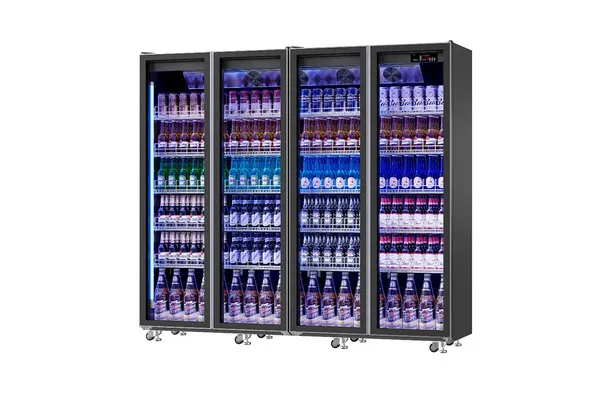
Compare bar coolers, back bar and undercounter designs, beer temperature needs, glass door…
2026-09
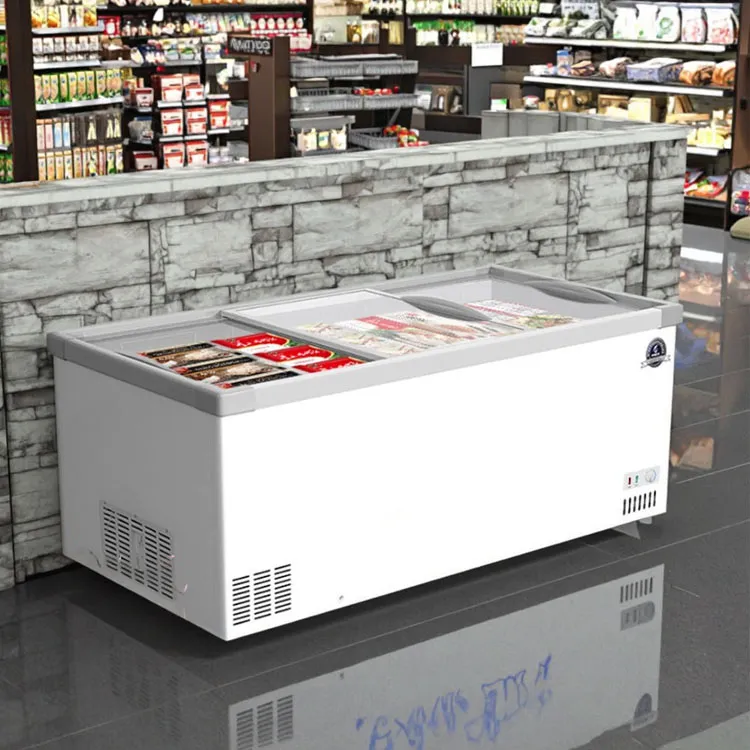
The SLS-ZD1860 Combo Island Cabinet measures 1860 × 810 × 800 mm and lists a temperature r…
سنرد عليك في غضون 24 ساعة. إذا كان للحالة العاجلة، يرجى إضافة واتساب/وي شات: +8617806295551. أو اتصل على +8617806295551/+8617660987312 مباشرة.
*نحن نحترم سريتك وجميع معلوماتك محمية.
لن نستخدم معلوماتك إلا للرد على استفسارك ولن نرسل أبداً رسائل بريد إلكتروني غير مرغوب فيها أو رسائل ترويجية.