





How to Choose a Commercial Back Bar Cooler or Glass Door Beverage Refrigerator
Compare bar coolers, back bar and undercounter designs, beer temperature needs, glass door…

 10:31
10:31 A aquisição de um frigorífico comercial inadequado pode resultar em um serviço lento, desperdício de alimentos, contas de energia elevadas e tempo de inatividade dispendioso. Esses problemas agravam-se rapidamente num restaurante, supermercado ou hotel com grande afluência. A solução consiste em escolher o frigorífico ou congelador que melhor se adapte às suas necessidades de armazenamento, fluxo de trabalho, condições ambientais e utilização comercial diária.
Ao comparar frigoríficos comerciais à venda, opte com base na gama de temperaturas, capacidade útil, design de porta frontal ou embutido, tipo de porta, sistema de compressor, eficiência energética, higiene e acesso para manutenção. O melhor frigorífico comercial não é simplesmente o modelo mais barato; é o aparelho que apoia de forma fiável a sua operação de restauração, a carga de produtos, a disposição da cozinha e os custos operacionais a longo prazo.
Uma pesquisa por frigoríficos comerciais A pesquisa «à venda» pode apresentar centenas de modelos. Alguns são frigoríficos altos de porta frontal. Outros são frigoríficos compactos de encastrar, vitrinas com porta de vidro, mesas de preparação, frigoríficos para bebidas ou congeladores comerciais.
Podem todos refrigerar produtos, mas não cumprem a mesma função.
As orientações do Departamento de Energia dos EUA relativas à aquisição de equipamento de refrigeração comercial incluem armários de porta aberta, armários de porta deslizante, armários de passagem, vitrinas, expositores, armários de bancada, armários de trabalho, refrigeradores de garrafas, armários de bar e outros equipamentos de refrigeração comercial. Esta variedade demonstra por que razão os compradores devem ter em conta a aplicação em vez do preço.
Antes de comprar frigoríficos comerciais, defina:
No que diz respeito às aquisições B2B, tenha também em conta a quantidade mínima de encomenda (MOQ), a embalagem, o carregamento de contentores, as peças sobressalentes, a garantia, a imagem de marca e a consistência nas encomendas recorrentes.
Isso é especialmente importante para distribuidores e cadeias que encomendam um stock completo de frigoríficos comerciais, em vez de apenas um frigorífico.
Não existe uma única opção ideal frigorífico comercial para cada aplicação. A refrigeração profissional divide-se em vários grupos, e cada um deles resolve um problema diferente relacionado com o armazenamento ou com o fluxo de trabalho.
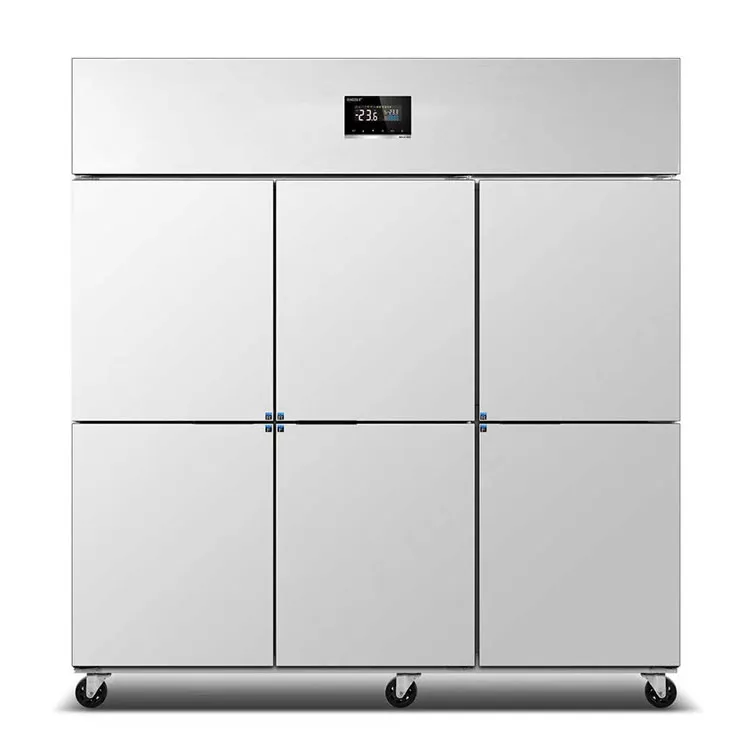
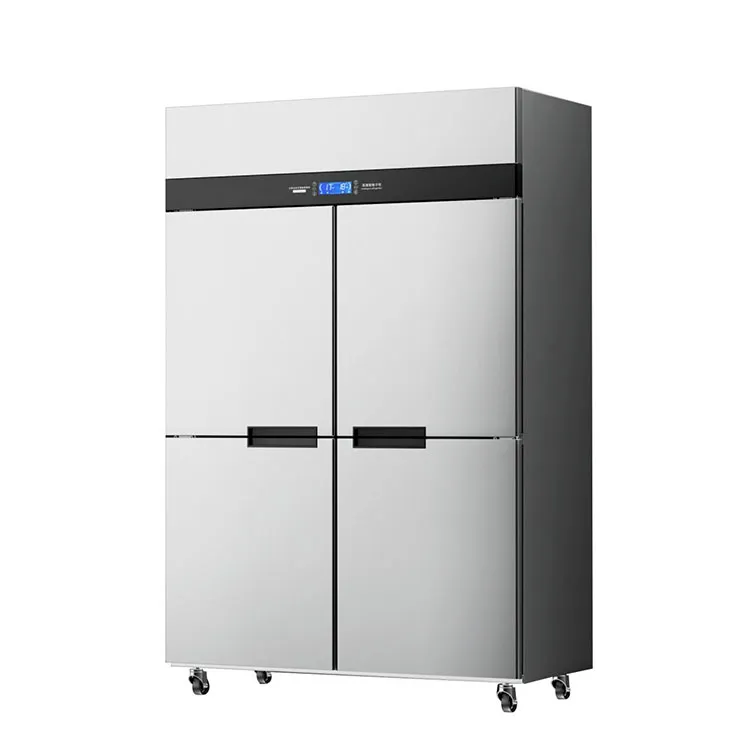
Um frigorífico de porta frontal é um armário alto e vertical que permite um acesso fácil a ingredientes refrigerados. É comum em restaurantes, hotéis, cozinhas institucionais, padarias, cafetarias e áreas de produção alimentar.
Os frigoríficos de encastrar cabem debaixo de balcões e bancadas. Mantêm os ingredientes ao alcance dos funcionários e são úteis em locais onde o espaço disponível é limitado.
Os frigoríficos com bancada proporcionam uma superfície de trabalho resistente por cima do espaço de armazenamento refrigerado. São ideais para áreas de preparação onde os funcionários precisam tanto de espaço na bancada como de ingredientes refrigerados.
Uma mesa de preparação combina o armazenamento refrigerado de ingredientes com uma superfície de preparação ou uma área para tabuleiros de ingredientes. Um frigorífico de mesa de preparação de sanduíches, por exemplo, ajuda o pessoal a preparar sanduíches, saladas, pizzas e refeições de serviço rápido.
Um frigorífico de exposição utiliza portas de vidro para expor produtos refrigerados aos clientes. É especialmente adequado para lojas de conveniência, supermercados, cafés, lojas de bebidas ou áreas de comida para levar.
Um congelador comercial mantém os alimentos congelados a temperaturas mais baixas e pode apresentar um design vertical, de encastrar, de exposição ou tipo baú.
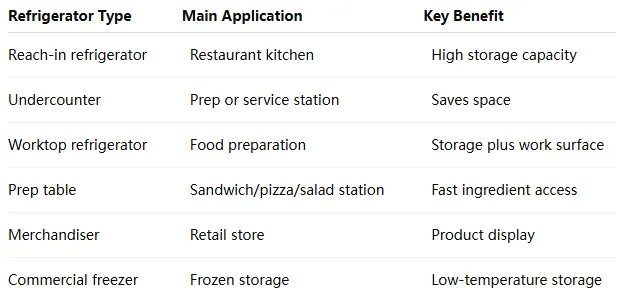
A escolha do equipamento comercial adequado depende do fluxo de trabalho.
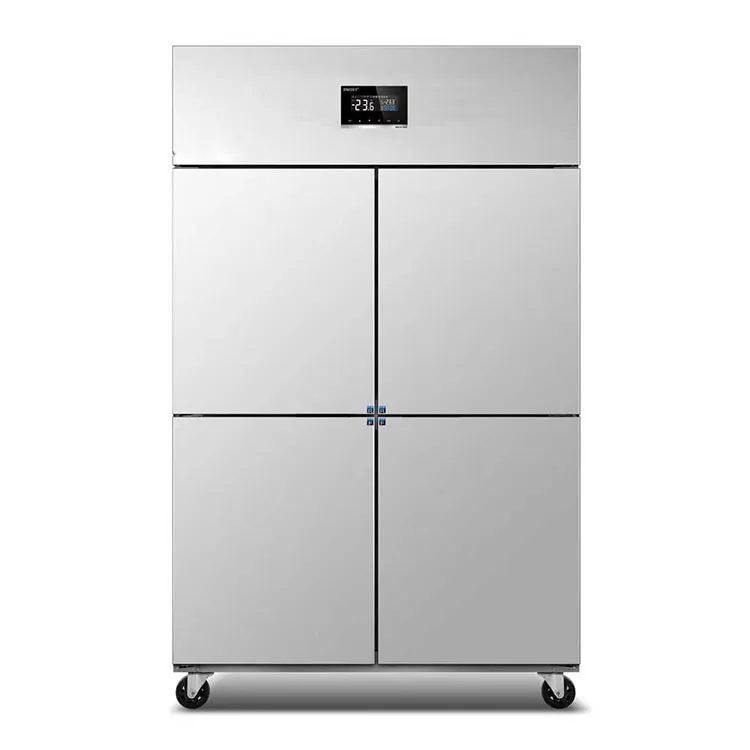
Um frigorífico de porta aberta é um dos equipamentos mais úteis de uma cozinha comercial, pois combina um amplo espaço de armazenamento vertical com um acesso rápido por parte do pessoal.
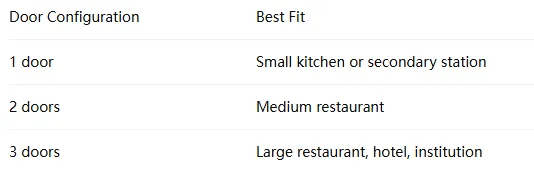
Um frigorífico comercial comum pode ter uma, duas ou três portas.
Entre as aplicações mais comuns encontram-se:
Um frigorífico comercial de porta frontal é útil quando os funcionários precisam de aceder regularmente aos ingredientes ao longo do dia.
Um frigorífico vertical de porta aberta aproveita o espaço vertical de forma eficiente, mas os compradores devem comparar a capacidade líquida, em vez de se basearem apenas nas dimensões exteriores.
No interior do armário, o evaporador, a secção do compressor, as prateleiras e as condutas de ar reduzem o espaço útil de armazenamento.
Um frigorífico vertical comercial de alta qualidade deve também permitir uma circulação adequada do ar à volta dos alimentos armazenados. Encher demasiado um frigorífico pode provocar variações de temperatura.
Muitos compradores adquirem frigoríficos e congeladores de porta frontal como um conjunto de equipamentos a condizer.
Isto pode simplificar:
No caso dos grupos de restauração, a uniformidade entre vários estabelecimentos também pode facilitar a manutenção.
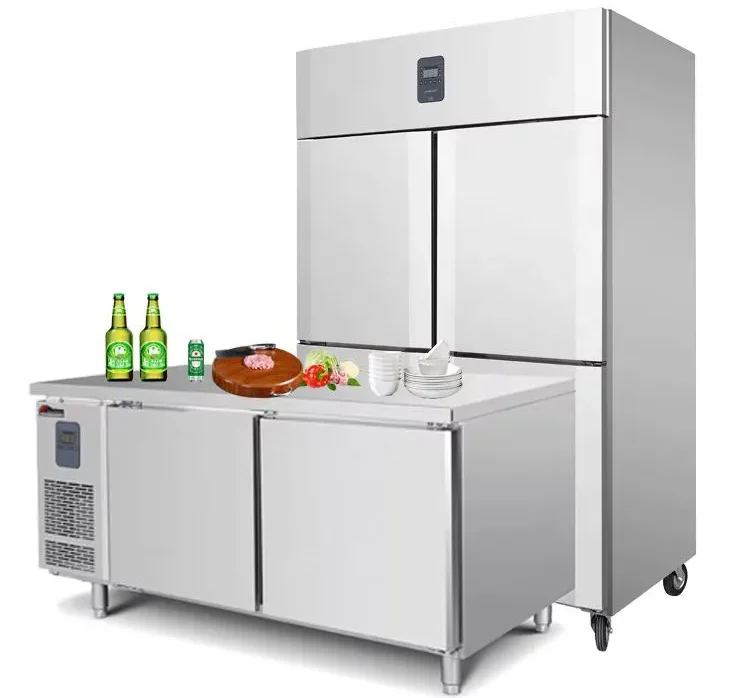
Estes três produtos parecem-se, mas têm finalidades diferentes.
Um frigorífico embutido no balcão serve principalmente para armazenar alimentos a frio por baixo de um balcão já existente.
Um modelo de bancada proporciona uma superfície útil.
Uma mesa de preparação permite, normalmente, um acesso rápido aos ingredientes durante a montagem ou a preparação.
Um frigorífico comercial de encastrar é útil quando os funcionários precisam de produtos refrigerados perto de um balcão de atendimento.
As aplicações típicas incluem:
Um frigorífico de encastrar com gavetas pode melhorar a organização dos ingredientes e reduzir os problemas com a abertura da porta em corredores estreitos.
Os frigoríficos de bancada oferecem espaço de armazenamento refrigerado por baixo de uma superfície de trabalho em aço inoxidável.
Este projeto pode ajudar as cozinhas pequenas a utilizar o mesmo espaço para dois fins.
Os frigoríficos de preparação facilitam a confeção de comida rápida. A parte superior pode acomodar tabuleiros de comida, enquanto o armário inferior armazena ingredientes adicionais.
Um frigorífico para a preparação de sanduíches é ideal para:
A melhor opção depende do seu fluxo de trabalho.
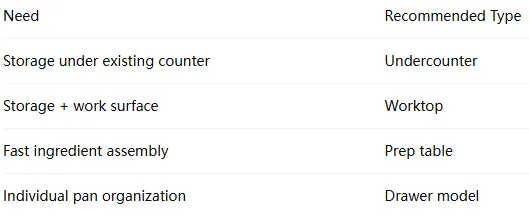
Uma cozinha compacta pode utilizar os três em diferentes áreas de trabalho.
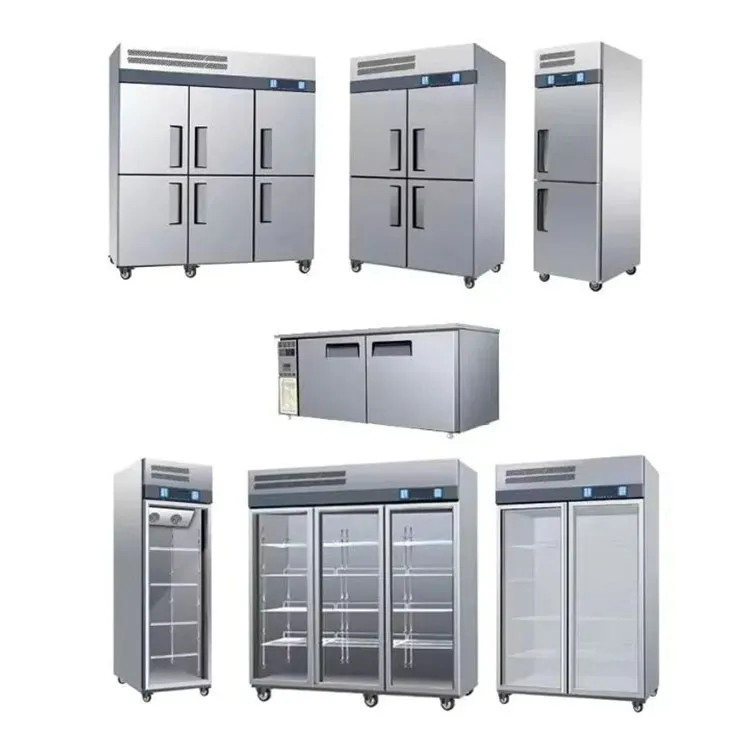
Um frigorífico com porta de vidro tem duas funções.
Mantém os produtos frescos e expõe-nos.
Isso torna os frigoríficos com porta de vidro especialmente úteis em áreas de contacto com o cliente, onde a visibilidade do produto pode incentivar a compra.
Entre os exemplos contam-se:
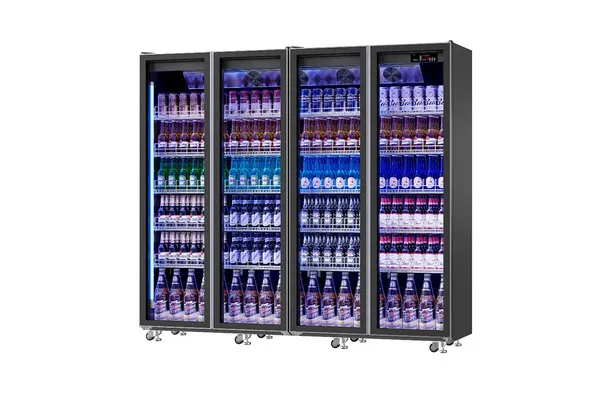
Um frigorífico de exposição com porta de vidro permite que os clientes vejam as bebidas engarrafadas, os alimentos embalados, os produtos lácteos, as sobremesas ou outros produtos refrigerados antes de abrirem o compartimento.
Um expositor com porta de vidro pode incluir:
Frigoríficos para bebidas e aplicações comerciais no setor das bebidas
Um frigorífico para bebidas é um formato comum de expositor.
Pode conter:
No retalho de bebidas a nível comercial, a visibilidade dos produtos pode ser quase tão importante quanto o desempenho da refrigeração.
Um expositor vertical para frigoríficos permite aproveitar o espaço no chão de forma eficiente, ao mesmo tempo que exibe um grande número de referências.
Alguns bares e projetos do setor da hotelaria e restauração podem, em vez disso, utilizar um balcão de serviço comercial, um refrigerador de garrafas ou um armário para bebidas embutido no balcão, nos quais o acesso do pessoal é mais importante do que o auto-serviço dos clientes.
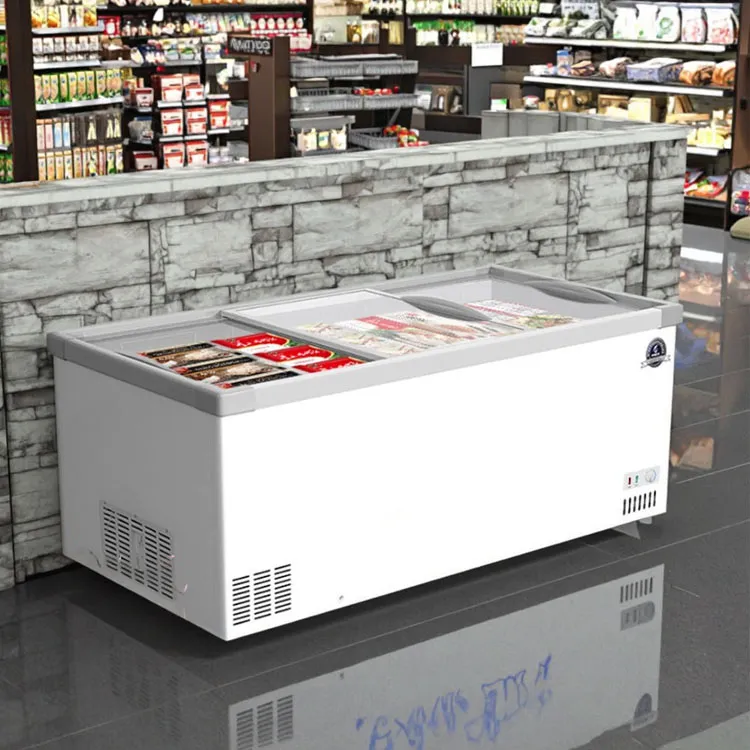
O equipamento de exposição de gelados para uso comercial requer temperaturas de congelador, em vez das condições normais de um frigorífico.
Por conseguinte, os compradores devem distinguir as vitrinas refrigeradas das vitrinas de produtos congelados durante o processo de aquisição.
Um armário que pareça semelhante por fora pode ter um sistema de refrigeração muito diferente no interior.
Um frigorífico armazena produtos refrigerados.
Um congelador serve para guardar produtos congelados.
Parece óbvio, mas muitas empresas precisam de ambas as coisas num espaço limitado.
A frigorífico comercial Um combo de congelador e frigorífico permite combinar o armazenamento de produtos refrigerados e congelados num único armário. Esta solução pode ser adequada para operações com quantidades moderadas de ambos os tipos de produtos.
No entanto, as unidades combinadas também apresentam vantagens e desvantagens:
Um conjunto de frigorífico e congelador comerciais específicos pode ser a melhor opção quando o volume de armazenamento é elevado.
Considere uma unidade combinada para:
Escolha unidades separadas para:
A decisão correta depende das necessidades de armazenamento.
Um frigorífico comercial não deve ser utilizado para congelar produtos, tal como um congelador não deve ser mantido a uma temperatura desnecessariamente elevada para servir de frigorífico.
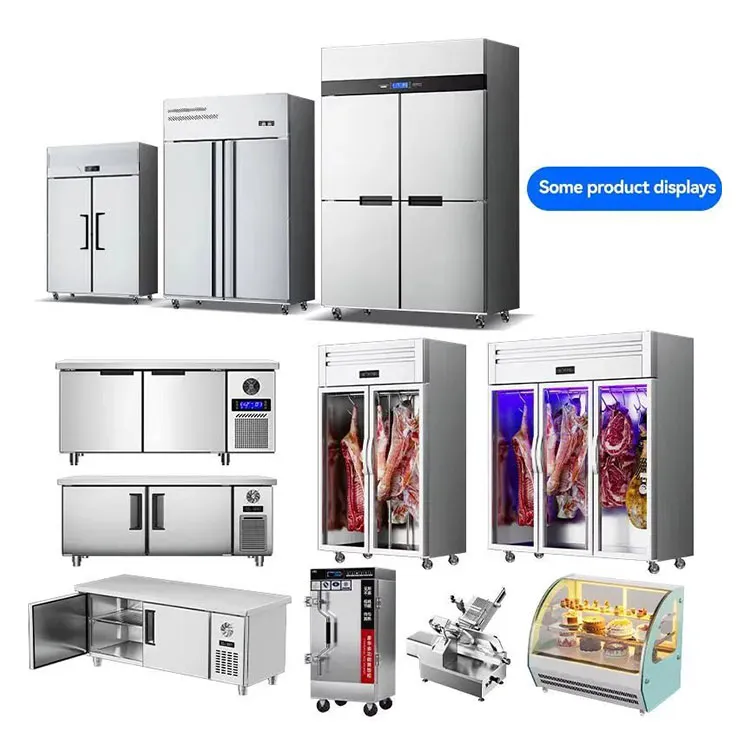
Um frigorífico comercial deve servir de apoio à cozinha, em vez de a dominar.
Meça cuidadosamente o espaço disponível.
Verificar:
Um frigorífico alto e vertical aproveita de forma eficiente o espaço de arrumação na vertical, enquanto os equipamentos embutidos poupam espaço valioso nos corredores.
Uma porta frigorífico comercial pode ter:
As portas opacas são adequadas para cozinhas onde não é necessária a visibilidade dos produtos.
Uma configuração com porta de vidro comercial é mais adequada para o comércio a retalho ou para garantir a visibilidade do stock.
Ao escolher uma unidade vertical comercial para portas, tenha em conta a distância a que cada porta se abre para o corredor.
Numa cozinha movimentada, uma porta muito larga pode impedir a circulação do pessoal.
Portas de meia altura ou várias secções mais pequenas podem ser úteis em alguns layouts.
Uma regra simples de planeamento é:
Stock refrigerado necessário = Consumo diário máximo + stock de segurança
Não escolha o frigorífico com base apenas na procura média.
Os períodos de férias, o tráfego ao fim de semana, os eventos nos hotéis ou os horários de maior afluência nos restaurantes podem aumentar rapidamente as necessidades de armazenamento.
Um frigorífico profissional funciona num ambiente adverso.
As cozinhas comerciais expõem o equipamento a:
É por isso que o aço inoxidável é comum na refrigeração alimentar comercial.
Um frigorífico comercial em aço inoxidável pode oferecer uma superfície resistente, lisa e de aspeto profissional, mas os compradores devem perguntar onde é que o aço inoxidável é realmente utilizado.
Verifique o:
Nem todos os armários descritos como sendo de aço inoxidável utilizam o mesmo material em todas as superfícies.
O compressor faz circular o fluido refrigerante pelo sistema de refrigeração.
No entanto, a marca ou o tamanho do compressor, por si só, não determinam o desempenho.
Avalie também:
O bom funcionamento de um frigorífico comercial fiável depende da coordenação de todas estas peças.
É essencial manter um controlo estável da temperatura.
Um frigorífico deve manter as condições adequadas para os produtos, mesmo quando:
No caso dos compradores B2B, solicite ao fornecedor a faixa de temperatura testada e as condições ambientais de funcionamento.
Não se baseie numa frase de catálogo como “arrefecimento potente”.”
Um frigorífico comercial pode funcionar 24 horas por dia.
Isso faz com que a eletricidade seja uma parte importante do custo de propriedade.
A ENERGY STAR indica que os frigoríficos comerciais com porta sólida certificados podem poupar cerca de 325 kWh por ano, enquanto os frigoríficos comerciais com porta de vidro certificados podem poupar cerca de 370 kWh por ano, em comparação com os modelos padrão, de acordo com os pressupostos do seu programa.
No caso de um frigorífico, isso é útil.
Para 50 ou 100 unidades, o efeito torna-se muito maior.
Uma unidade de refrigeração comercial energeticamente eficiente pode utilizar:
No entanto, o consumo real de energia também depende de:
O DOE recomenda a manutenção das bobinas do condensador, das juntas e dos fechos das portas, uma vez que os permutadores de calor sujos e as portas com fugas podem fazer com que o equipamento de refrigeração tenha de trabalhar mais.
Os diferentes setores necessitam de equipamentos de refrigeração comercial distintos.
Os frigoríficos comerciais para restaurantes dão normalmente prioridade a:
Entre as opções mais comuns contam-se os frigoríficos de porta frontal, as unidades de encastrar, os frigoríficos de preparação e os congeladores.
Quando os compradores procuram frigoríficos comerciais para restaurantes, o fluxo de trabalho deve orientar a decisão.
Os hotéis podem exigir:
As aplicações de retalho centram-se mais em:
Um frigorífico expositor pode contribuir para as vendas de produtos refrigerados, enquanto um congelador comercial serve para guardar gelados e alimentos congelados.
Uma loja de conveniência pode utilizar:
Estas empresas podem necessitar de:
É comum encontrar pesquisas sobre marcas de frigoríficos comerciais.
No entanto, o reconhecimento da marca, por si só, não indica se um frigorífico é adequado para o seu negócio.
Uma equipa de aquisições deve comparar as opções de frigoríficos comerciais com base em especificações mensuráveis.
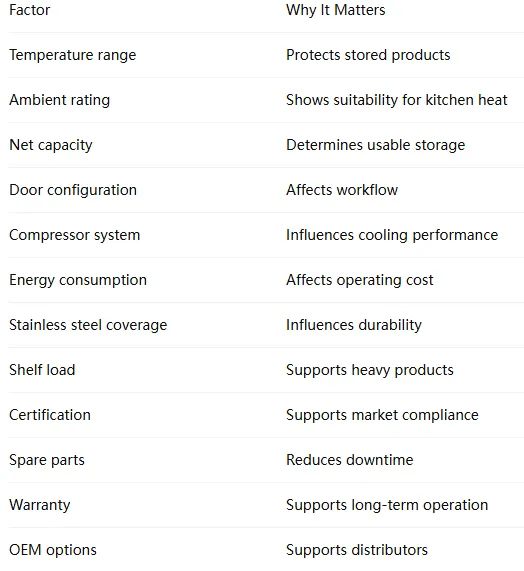
Um frigorífico comercial moderno deve ser avaliado como um sistema.
Não escolha apenas porque a página de um produto diz:
Essas afirmações precisam de provas.
Peça:
Para os importadores e distribuidores, a capacidade de um fornecedor fabricar produtos com as mesmas especificações de forma consistente ao longo de encomendas repetidas pode ser tão importante quanto a primeira amostra.
Uma consulta B2B bem fundamentada fornece ao fabricante informações suficientes para recomendar o equipamento de refrigeração adequado.
Na Senlisi, recomendamos que se inclua:
Questões técnicas
Pergunte:
Questões comerciais
Pergunte:
Estas perguntas transformam um pedido de informação geral numa especificação pronta para produção.
Senlisi é um fabricante e exportador global de equipamento de refrigeração comercial com sede em Qingdao, na China.
Fornecemos uma gama de frigoríficos comerciais, congeladores, vitrinas e soluções de refrigeração personalizadas para os mercados profissionais a nível mundial.
Entre os nossos clientes contam-se:
Em vez de tratarmos todos os pedidos como se fossem pedidos idênticos de frigoríficos, analisamos cada caso em particular.
Um comprador de um supermercado pode precisar de um expositor comercial com portas de vidro.
Um restaurante pode precisar de um frigorífico e de um congelador de porta frontal.
Um café pode precisar de um frigorífico de encastrar.
Uma charcutaria pode precisar de refrigeração para a preparação de sanduíches.
Um retalhista de bebidas pode precisar de um grande frigorífico comercial para bebidas.
Essa abordagem centrada na aplicação ajuda os compradores B2B a evitar compras excessivas ou a escolha do armário errado.
Dependendo do produto e dos requisitos do projeto, o aprovisionamento de refrigeração comercial pode envolver:
Para distribuidores, empreiteiros, cadeias de restaurantes, retalhistas e compradores de projetos, isto pode fazer a diferença entre adquirir equipamento isolado e criar um programa de refrigeração coerente.
A escolha do melhor frigorífico comercial depende do tamanho da cozinha, das necessidades de armazenamento, do tipo de produto, da frequência de abertura das portas, da temperatura ambiente e do fluxo de trabalho. Os frigoríficos de porta aberta são adequados para o armazenamento a granel de produtos refrigerados, enquanto os frigoríficos de encastrar e os de preparação mantêm os ingredientes mais próximos dos funcionários.
Um frigorífico comercial é concebido a pensar em condições de funcionamento profissionais, tais como acessos frequentes, grandes quantidades de produtos, fluxos de trabalho do setor da restauração e requisitos de higiene comercial. O equipamento residencial destina-se a um caso de utilização diferente e está sujeito a requisitos de eficiência distintos.
Opte por um frigorífico comercial com portas de vidro quando a visibilidade dos produtos ou a apresentação comercial forem importantes. Opte por portas opacas quando a eficiência de armazenamento e a utilização nas zonas de serviço forem mais importantes do que a exposição. As lojas de retalho costumam preferir as portas de vidro, enquanto as cozinhas dos restaurantes utilizam normalmente unidades com portas opacas.
Calcule as suas necessidades máximas de stock, a área útil disponível, a largura livre da porta e a frequência de reabastecimento. Um modelo com uma única porta pode ser adequado para uma operação de menor dimensão, enquanto um armário comercial com duas ou três portas pode ser adequado para cozinhas de maior dimensão.
Nos mercados em que a norma ENERGY STAR se aplica, os modelos certificados podem reduzir o consumo de energia em comparação com os modelos padrão. A ENERGY STAR apresenta dados relativos às poupanças anuais para configurações elegíveis de frigoríficos comerciais com porta sólida e com porta de vidro. Os compradores devem comparar o modelo exato e os dados dos testes, em vez de partirem do princípio de que todos os frigoríficos comerciais são elegíveis.
Indique o país de destino, a aplicação, as dimensões, a configuração da porta, a temperatura pretendida, as condições ambientais, a tensão, a quantidade encomendada, os requisitos de certificação e quaisquer necessidades relacionadas com o fabricante original (OEM) ou a marca. Isto permite uma recomendação e um orçamento mais precisos.
2026-10
Compare bar coolers, back bar and undercounter designs, beer temperature needs, glass door…
2026-09
The SLS-ZD1860 Combo Island Cabinet measures 1860 × 810 × 800 mm and lists a temperature r…
Responder-lhe-emos no prazo de 24 horas. Se for um caso urgente, adicione WhatsApp/WeChat: +8617806295551. Ou ligue diretamente para +8617806295551/+8617660987312.
*Respeitamos a sua confidencialidade e todas as informações são protegidas.
Apenas utilizaremos as suas informações para responder ao seu pedido e nunca enviaremos mensagens de correio eletrónico ou mensagens promocionais não solicitadas.