






How to Choose a Commercial Back Bar Cooler or Glass Door Beverage Refrigerator
Compare bar coolers, back bar and undercounter designs, beer temperature needs, glass door…

 17:54
17:54 Warm drinks, crowded refrigerators, poor product visibility, and constant restocking can hurt customer experience and staff efficiency. The problem becomes worse during peak hours. A properly selected beverage cooler fridge solves this by providing dedicated, organized, reliable cold storage for drinks.
A beverage cooler fridge is a refrigerator designed to chill and organize bottled or canned beverages. For commercial use, choose a beverage refrigerator based on usable capacity, temperature control, cooling recovery, glass door design, adjustable shelves, installation type, energy use, ambient conditions, and service requirements—not appearance or cabinet size alone.
A beverage cooler fridge is a dedicated refrigeration appliance for bottled water, soda, juice, canned coffee, energy drinks, beer, dairy beverages, mixers, and other packaged drinks. Depending on its size and design, buyers may also call it a beverage refrigerator, beverage fridge, beverage center, drink cooler, beverage cooler refrigerator, or commercial beverage cooler.
The basic job is to keep a wide range of drinks cold and organized. In a commercial environment, however, the equipment must handle much more than a typical household fridge. Doors may open dozens or hundreds of times during a shift. Shelves carry heavy bottles and cans. The cabinet may operate near cooking equipment or in a warm retail space. Cooling must recover quickly.
The U.S. Department of Energy includes bottle coolers, display refrigerators, undercounter units, worktop units, and back-bar coolers within its commercial refrigeration purchasing guidance. That makes an important point: professional refrigeration is designed around commercial operating conditions, not simply residential storage.
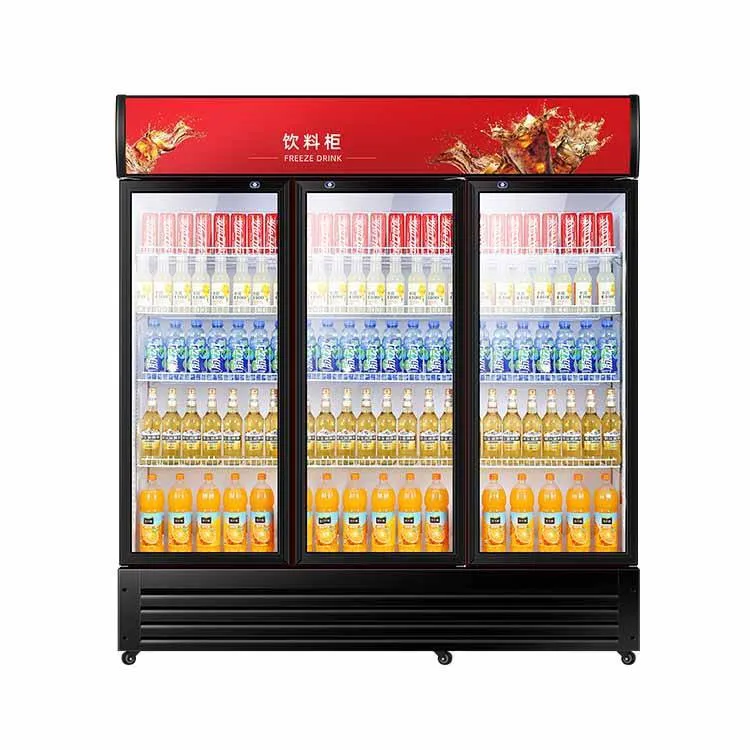
A standard refrigerator usually stores many kinds of food at the same time. Meat, vegetables, dairy products, sauces, prepared dishes, and beverages all compete for the same space.
A dedicated beverage refrigerator separates drink storage from the main refrigerator. Staff gain more organized space, customers can see products more easily, and restocking becomes simpler. In a retail setting, a transparent beverage fridge with glass door can also turn refrigeration into a selling tool.
Imagine a busy convenience store. A customer wants a cold soft drink. If all beverages sit inside a closed back-room fridge, the customer cannot browse products without staff help. A beverage display cooler places those products directly in sight.
The same benefit applies to:
A commercial refrigerator also differs from ordinary home appliances in how it is used. ENERGY STAR notes that commercial refrigerators and freezers are designed and tested with commercial operations in mind, including hot kitchen environments and frequent door openings.
Beverage Refrigerator vs. Standard Refrigerator
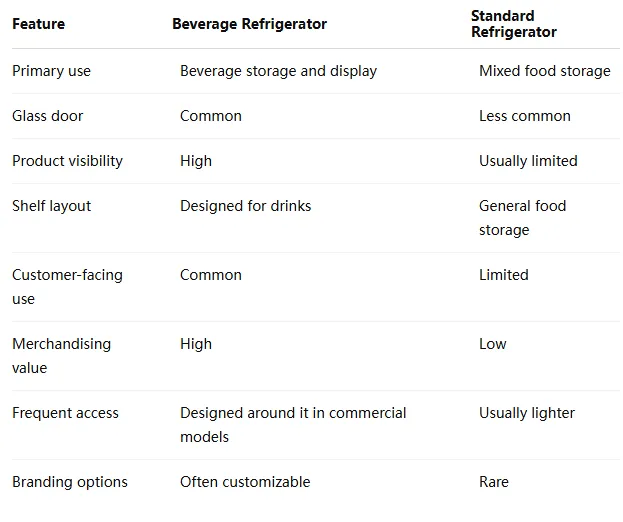
A commercial beverage refrigerator therefore does more than chill drinks. It supports sales, workflow, inventory control, and customer convenience.
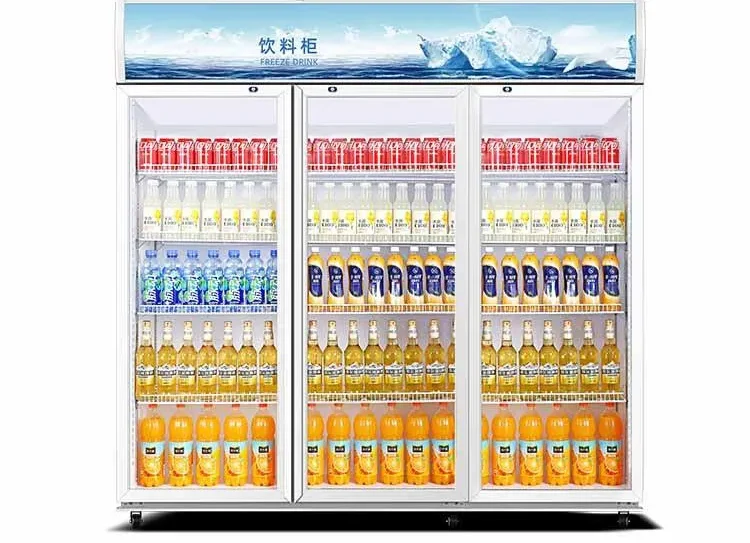
The term beverage center can describe several products. A buyer should first decide where the refrigerator will operate and who needs access to it.
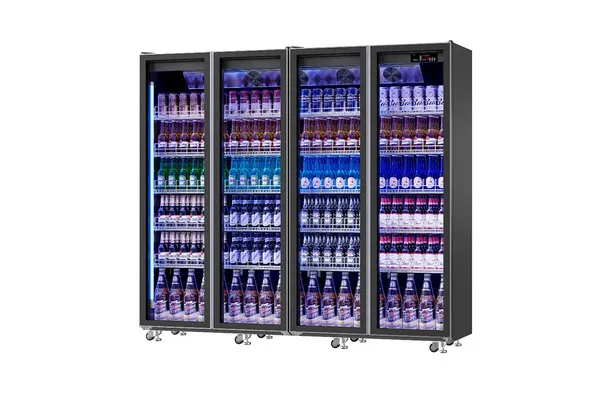
. upright commercial unit gives businesses a large display area while using relatively little floor width. It is one of the most practical commercial beverage refrigerators for retail.
К числу типичных областей применения относятся:
A tall glass-door commercial beverage cooler makes beverages easy to see and easy to buy.
An undercounter beverage refrigerator fits below a service counter. These units are useful in bars, cafés, restaurants, hotel lounges, reception areas, and other spaces where employees need drinks close to the workstation.
You may also see terms such as:
These names can overlap, but the ventilation design matters. Not every freestanding unit can operate safely inside fitted furniture.
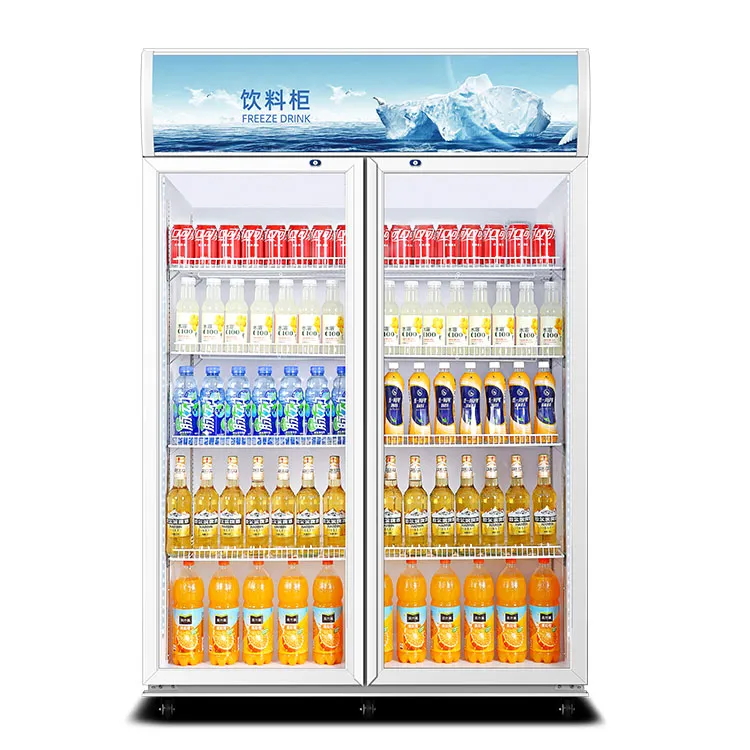
A compact refrigerator works well when only a small amount of cold storage is needed.
К числу типичных областей применения относятся:
Searchers may call these products mini fridges, a mini beverage cooler, or a small beverage fridge. For commercial procurement, however, compact size should never be the only criterion. Buyers also need to check durability, compressor performance, ventilation, usable capacity, and door-opening frequency.
A beverage display refrigerator focuses strongly on visibility. Good lighting, clean glazing, organized shelves, and branded panels help beverages stand out.
For retail businesses, this is not simply cold storage.
It is merchandising.
Choosing built-in or freestanding refrigeration depends mainly on ventilation and installation.
A freestanding beverage refrigerator normally needs space around the cabinet so heat can escape. It offers flexible placement and can be easier to reposition when a retail or foodservice layout changes.
A built-in beverage refrigerator is designed to sit inside a fitted counter or cabinetry. A true built-in beverage cooler commonly uses front ventilation so the refrigeration system can release heat without depending on large side clearances.
Choose Freestanding When:
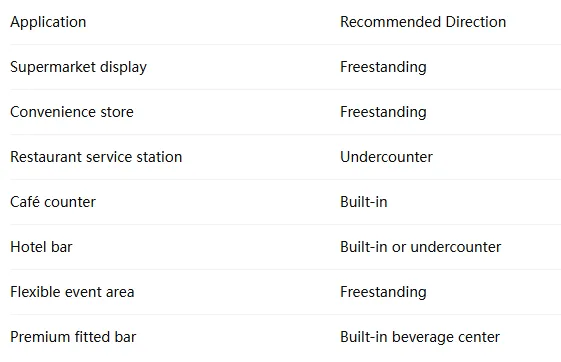
A built-in beverage center should not be selected only because its outer width matches the opening.
Ventilation matters.
Door clearance matters.
Service access matters.
An improperly enclosed freestanding refrigerator may operate at higher condensing temperatures and place extra stress on the refrigeration system.
For fitted projects, send your manufacturer an installation drawing showing:
This is far safer than ordering a refrigerator from one dimension alone.
Size should follow demand rather than guesswork.
DOE advises commercial buyers to choose refrigeration equipment appropriately sized for its intended use, noting that oversized products increase initial cost and lead to additional energy losses.
A small beverage fridge may require constant restocking. A very large cabinet may waste valuable floor space.
Start with six questions:
Required cold stock = Peak hourly sales × Restocking interval × Safety factor
Imagine a café selling 50 beverages per hour during peak demand.
Staff refill the cabinet every three hours.
Using a safety factor of 1.2:
50 × 3 × 1.2 = 180 beverages
The refrigerator should therefore provide practical storage for roughly 180 units of the real product mix.
Two refrigerators with the same gross volume may not offer the same useful beverage storage.
Capacity changes with:
A large capacity cabinet still needs enough open space for cold air to circulate.
Residential and hospitality buyers often search for a 15 inch beverage center or 24 inch beverage center. A 24 inch beverage refrigerator may fit many standard counter layouts, but “24 inches” tells you very little about real capacity.
For a commercial project, check:
Whether you need a narrow cabinet or a 24-inch-class refrigerator, always work from full technical dimensions.
A glass door changes the role of a refrigerator.
It lets customers see drinks without opening the cabinet. Staff can check inventory faster. Labels stay visible. Products look more attractive.
For supermarkets and convenience stores, these benefits can support impulse purchases.
A commercial glass-door design may include:
A stainless steel glass door cabinet can combine a durable professional finish with clear product presentation.
Some fitted hospitality projects may also ask about a panel ready glass door design or other appearance customization. The key is to make sure decorative requirements do not interfere with ventilation, insulation, door sealing, or service access.
Low-emissivity glazing is designed to reduce radiant heat transfer. In refrigerated display equipment, the complete energy result still depends on the door frame, seals, cabinet insulation, anti-sweat system, compressor, and operating environment.
So do not compare glass alone.
Compare the complete refrigerator.
Adjustable Shelves Add Flexibility
Adjustable shelves help one beverage center handle changing product sizes.
Today the cabinet may carry:
Next month it may also need:
Moving a shelf is easier than replacing the refrigerator.
Buyers should check:
A well-designed beverage fridge with glass door should keep products visible without blocking airflow.
There is no single ideal temperature for every beverage.
Water, carbonated soft drinks, juice, milk-based drinks, beer, and wine may all have different requirements. The beverage manufacturer’s recommendations and applicable food-safety rules should guide final temperature settings.
For a commercial cooler, stable temperature control matters more than simply selecting the lowest set point.
Buyers should evaluate:
The goal is precise temperature management across the cabinet.
When buyers want maximum capacity, they sometimes load every available gap.
That can reduce cooling performance.
Cold air needs room to move around bottles and cans. Blocking the evaporator or fan may create warmer and colder areas inside the same cabinet.
For consistent performance:
The result should be simple: drinks remain perfectly chilled, organized, and chilled and ready to serve.
For temperature-sensitive dairy or food beverages, operators must follow the relevant food-safety requirements. FDA guidance identifies 41°F/5°C as an important cold-holding threshold for time/temperature control for safety foods.
Not every beverage cooler needs separate temperature zones.
If most products need similar conditions, a single-zone refrigerator is simpler and may be more economical.
However, businesses that serve wine alongside beer, soda, water, and other drinks may benefit from a dual zone configuration.
A dual-zone beverage refrigerator divides storage into separate temperature areas. One side or section can handle general beverages, while another provides wine storage.
This creates a practical wine and beverage refrigerator for:
A wine and beverage cooler is especially useful where operators need both bottled drinks and dedicated storage for wine.
However, ask an important technical question:
Are the two zones truly controlled separately?
Some cabinets share airflow. Others use more independent systems.
For long-term storage for wine, buyers may also need to consider:
A standard beverage refrigerator should not automatically replace specialized wine refrigerators.
Likewise, bottles of wine may require different conditions from cold soda or beer. The goal is to keep each product at the ideal temperature for its intended service.
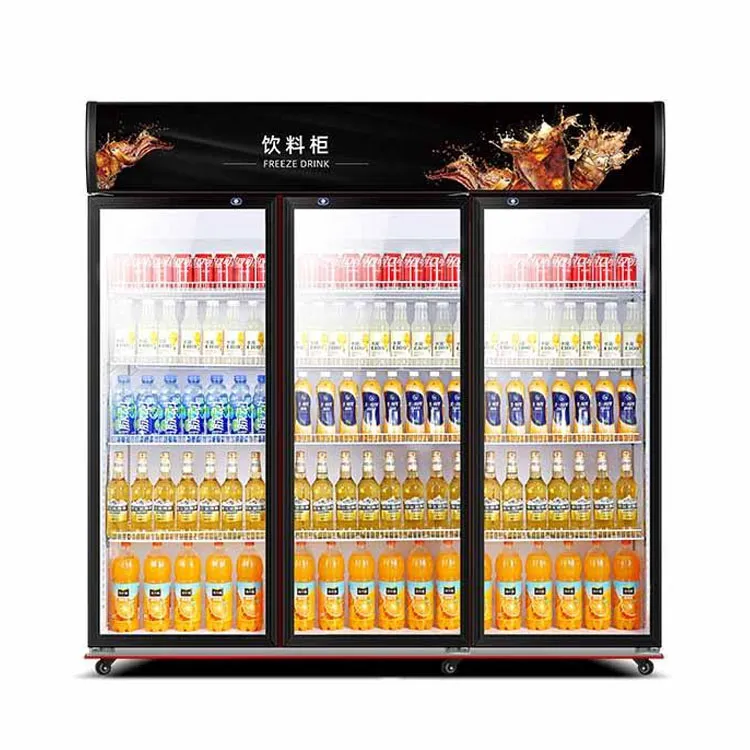
A коммерческий охладитель напитков can support many B2B environments. The important point is to match the refrigerator to the workflow.
Supermarkets and Grocery Stores
An upright beverage display cooler or multi-door commercial beverage refrigerator works well for bottled water, soda, juice, dairy beverages, energy drinks, and ready-to-drink products.
Convenience stores often have limited floor space but high beverage turnover.
A vertical commercial drink fridge uses height efficiently while presenting products directly to shoppers.
A restaurant may use:
A café may need a commercial refrigerator for drinks such as bottled water, juice, milk, soda, and ready-to-drink coffee.
A single hotel can require several beverage refrigeration formats:
A compact unit suitable for a hotel room is very different from the refrigerator serving a busy breakfast restaurant.
A bar may combine:
A home bar or home kitchen or bar search may use similar terms online, but Senlisi’s commercial B2B focus requires buyers to pay greater attention to duty cycle, service access, replacement parts, and operating conditions.
. outdoor beverage cooler should be outdoor rated for its intended environment.
A normal indoor refrigerator should not simply be placed in an outdoor kitchen.
Buyers should confirm:
For coastal resorts, corrosion-resistant construction can be particularly important.
Searching for the best beverage refrigerators is easy.
Buying the right commercial equipment is more complex.
Importers, distributors, supermarket groups, chain restaurants, hotel developers, beverage retailers, and institutional buyers need to evaluate much more than a product image or unit price.
At Senlisi, we recommend starting with an application brief.
Tell the Manufacturer:
Сенлиси is a global commercial refrigeration manufacturer and exporter based in Qingdao, China. We provide commercial refrigerators, freezers, display cabinets, and customizable refrigeration solutions for international B2B customers.
Our target applications include:
Depending on the project and model, customization can address:
For a distributor, the goal may be to build a complete product line rather than buy one standalone beverage refrigerator.
That is why we focus on the application first.
The terms often overlap. A beverage cooler usually emphasizes chilling and displaying packaged drinks, while a beverage refrigerator emphasizes refrigerated storage. For B2B buying, compare operating temperature, cooling recovery, capacity, glass construction, ventilation, energy use, and commercial duty rather than relying on the name.
A beverage fridge can take over drink storage and free useful space in the main refrigerator, but it may not replace a food-storage refrigerator. Food can require different sanitation standards, temperatures, shelving, and storage conditions.
Only when the manufacturer confirms that the installation provides adequate ventilation. Many freestanding beverage fridges require side or rear airflow. For enclosed installation, a suitable front-venting built-in or undercounter model is usually more appropriate.
Yes, when the refrigerator is designed for commercial environments. The glass door improves visibility and can support merchandising. Buyers should compare glazing, anti-condensation design, door gaskets, hinges, lighting, temperature recovery, and energy consumption.
The ideal temperature depends on the beverage. Water, soda, juice, dairy drinks, beer, and wine may need different storage or serving temperatures. Choose a refrigerator with reliable controls and follow product-manufacturer and food-safety guidance where applicable.
A dual-zone beverage center can be useful when wine and general drinks need different temperatures. For a retail cabinet holding only soda, water, and packaged drinks, one temperature zone may be simpler and more economical.
2026-10
Compare bar coolers, back bar and undercounter designs, beer temperature needs, glass door…
2026-09
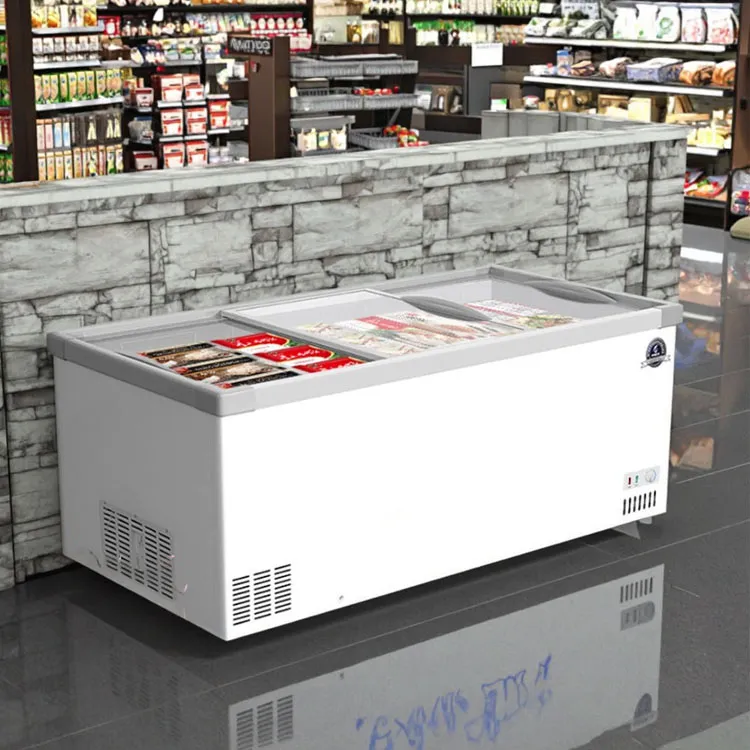
The SLS-ZD1860 Combo Island Cabinet measures 1860 × 810 × 800 mm and lists a temperature r…
Мы ответим вам в течение 24 часов. Если для срочного случая, пожалуйста, добавьте WhatsApp/WeChat: +8617806295551. Или позвоните по телефону +8617806295551/+8617660987312.
*Мы уважаем вашу конфиденциальность и защищаем всю информацию.
Мы будем использовать вашу информацию только для ответа на ваш запрос и никогда не будем отправлять нежелательные электронные письма или рекламные сообщения.