






Commercial Grade Refrigerators: What the Term Really Means Before You Buy
Commercial grade refrigerator" is one of the most searched phrases by restaurant owners, s…
 10:37
10:37 Senlis Technical Team | Commercial Refrigeration Manufacturer, founded in 2003 | Updated September 2, 2026
Buying one beverage cooler is a spec-sheet decision. Buying a batch for import or distribution is four separate decisions stacked together: which voltage and plug standard matches your destination market, which refrigerant clears your region’s regulations, which cooling method fits your climate, and what OEM branding actually changes on the unit versus the packaging.
Most beverage refrigerator content online is written for a single US end buyer choosing between models on a showroom floor — price, capacity, brand tier. A distributor placing a container order works from a different starting list. Voltage isn’t a checkbox, it’s a market-by-market variable. Refrigerant isn’t a spec line, it’s a compliance question at customs. None of that shows up in a single-unit guide, so it’s worth separating out here.
Beverage coolers across the copper tube (YF), fan circulation (YX), and internal pipe (YZ) series are OEM/ODM adjustable for voltage and plug type. The standard options are:
| Gerilim | Common plug standard | Typical destination markets |
| 110 V | US / North American plug | North America, parts of Latin America |
| 220 V | EU / UK plug variants | Europe, Southeast Asia, Africa, Middle East |
| 380 V | Industrial three-phase | Large-batch installations requiring higher load capacity |
This is confirmed at order stage, not assumed from the model number — the same SLS-YF02 cabinet ships in different electrical configurations depending on where the container is headed. Getting this wrong on a bulk order means a warehouse full of units that need rewiring before they’re sellable, which is a more expensive mistake at 50 units than at one.
Refrigerant type — R290, R134a, or R600 — is also an OEM/ODM option across this line, and it’s the spec most likely to matter for customs clearance rather than performance. R290 (propane-based) is a natural refrigerant with low global warming potential, and its use is directly tied to the phase-down of high-GWP refrigerants under the EU F-Gas Regulation, which governs the transition toward natural refrigerants in commercial refrigeration equipment entering EU markets. A batch destined for the EU benefits from R290 specification up front rather than a post-clearance retrofit.
R134a and R600 remain viable options for markets without equivalent restrictions, but a distributor shipping into multiple regions from one production run should confirm refrigerant-by-market requirements before placing the order, not after the container ships. This is the kind of detail a single-unit consumer guide never has to address, because a home-market buyer isn’t crossing a regulatory border with the purchase.
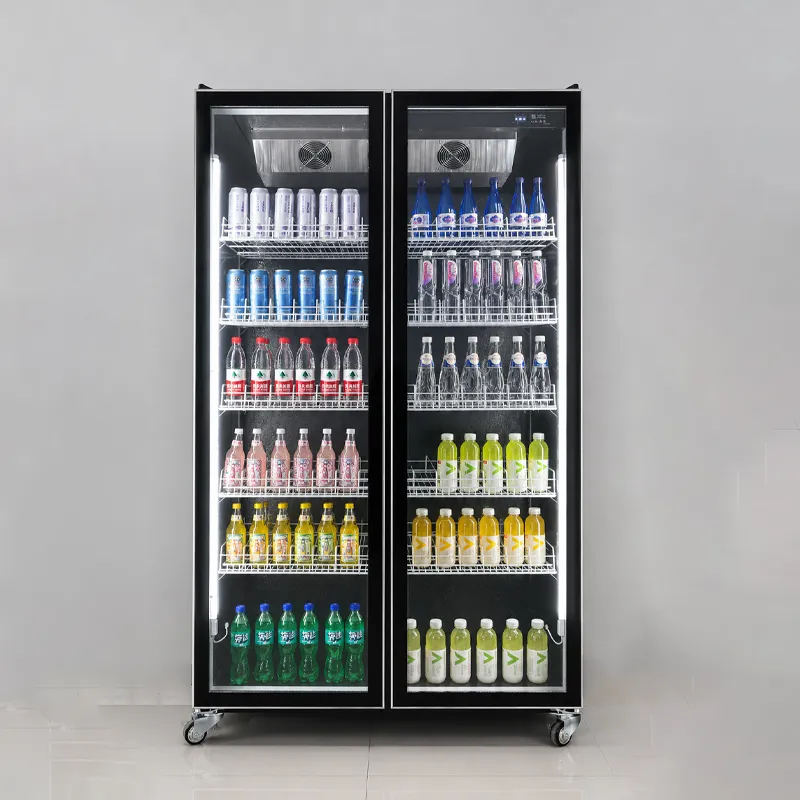
The three series differ in how they cool, and for a distributor stocking multiple units, that difference affects service calls across a fleet rather than one bartender’s preference:
Copper tube (YF) has the fewest moving parts, which means fewer field service calls across a distributed fleet of units sold to different end customers.
Fan circulation (YX) holds tighter temperature consistency, which matters more for beverage cooler resale into climates with wider ambient temperature swings.
Internal pipe (YZ) sits between the two, useful when an end customer wants more even cooling without the added service complexity of a fan system.
For a distributor selling into one climate zone with predictable ambient conditions, copper tube minimizes long-term support tickets. For resale into varied climates, fan circulation reduces the return-and-replace calls that come from inconsistent cooling complaints.
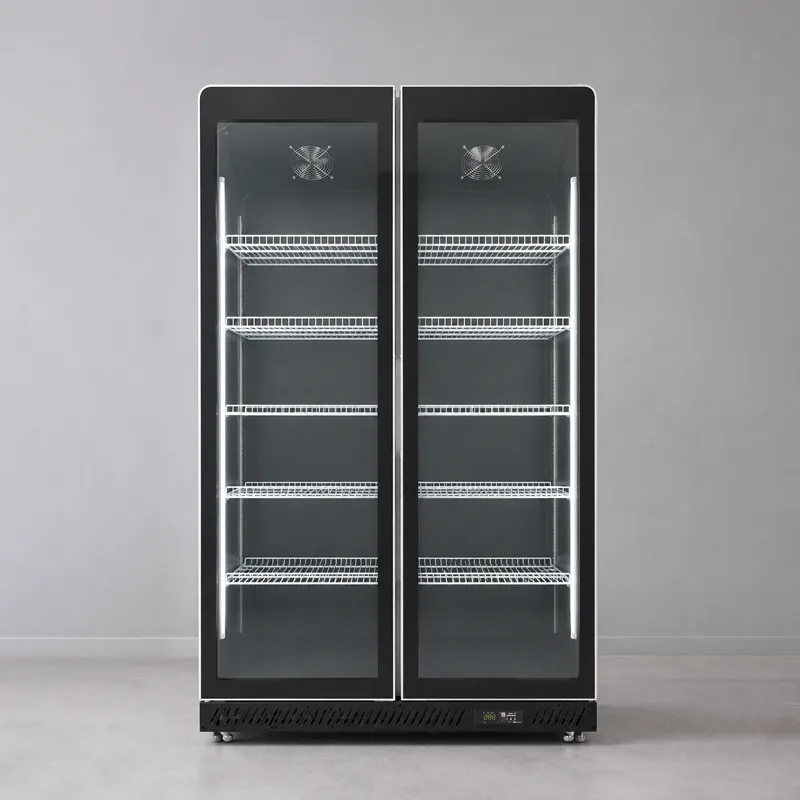
OEM/ODM customization covers exterior color and branding, interior layout (shelving, lighting, controls), and packaging with user-manual language matched to the destination market. It does not change the cabinet dimensions, door glass, or core cooling mechanism — those stay fixed to the series and configuration ordered. A distributor rebranding units under a private label gets a relabeled exterior and localized documentation, not a structurally different product. That distinction matters when setting customer expectations for warranty and parts compatibility across a private-label run.
Units move through a fixed six-step production sequence — laser cutting, stainless steel bending, laser welding, surface polishing, quality inspection, and cleaning and packing into 5-layer carton or pallet packaging for export. Every unit is tested for cooling stability, energy efficiency, and noise level before shipment, regardless of order size. Daily output across the facility runs at 400+ units, which sets the practical ceiling for how a batch order slots into existing production scheduling.
Minimum order quantity, exact lead time in days, and payment terms aren’t published figures — these are confirmed per project once configuration and quantity are set, not estimated in advance.
Units carry CE marking, RoHS compliance, and production under ISO 9001-managed processes. Certificate numbers and issuing bodies for a specific batch are provided on request ahead of the order — not listed as a general figure, since they vary by shipment and configuration.
A: Voltage and plug type are OEM/ODM options confirmed at order stage, so a mixed-market shipment is a configuration question to raise directly rather than something to assume from a single spec sheet.
A: Refrigerant pricing isn’t published; it’s a factor to raise when requesting a quote for your specific market and configuration.
A: No — branding and packaging customization don’t alter the dimensions, glass, or cooling mechanism, which stay fixed to the series and configuration ordered.
A: MOQ isn’t published and is confirmed per project based on configuration and destination market.
2026-09
Commercial grade refrigerator" is one of the most searched phrases by restaurant owners, s…
2026-09
Glass door construction, not door count or cabinet size, is what actually fails first in a…
Size 24 saat içinde cevap vereceğiz. Acil durum için lütfen WhatsApp/WeChat ekleyin: +8617806295551. Veya doğrudan +8617806295551/+8617660987312 adresini arayın.
*Gizliliğinize saygı duyuyoruz ve tüm bilgiler korunuyor.
Bilgilerinizi yalnızca sorunuza yanıt vermek için kullanacağız ve asla istenmeyen e-postalar veya tanıtım mesajları göndermeyeceğiz.