






Commercial Grade Refrigerators: What the Term Really Means Before You Buy
Commercial grade refrigerator" is one of the most searched phrases by restaurant owners, s…

 10:36
10:36 Senlis Technical Team | Commercial Refrigeration Manufacturer, founded in 2003 | Updated September 1 , 2026
A bar cooler purchase comes down to three decisions, not a brand list: how many doors your back-bar run needs, whether a standard 1830 mm or heightened 2010 mm cabinet fits your storage volume, and whether coated anti-fog glass or heated-wire demisting glass holds up in your climate. Get those three right and the rest of the spec sheet mostly sorts itself.
Search results for bar and beer coolers tend to be dealer catalog pages organized by manufacturer tier and price bracket. That’s useful once you already know what you’re buying — it’s less useful before that, when the real question is whether a taller cabinet or a wider one solves your storage problem, and whether the glass on the display doors will actually stay clear behind a busy bar on a humid night. None of the dealer pages walk through that decision directly, so here’s the framework.
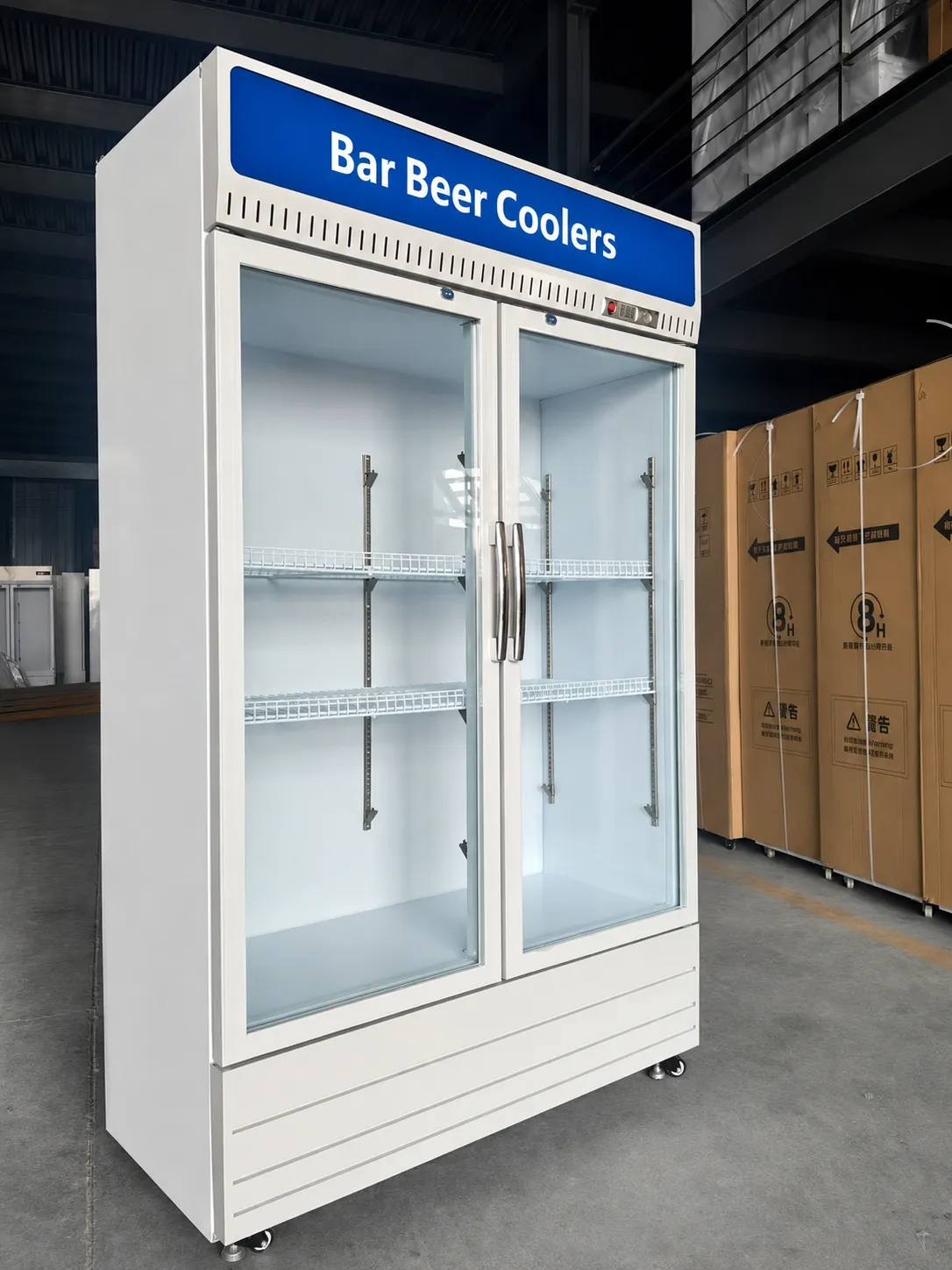
Bar beer coolers in this range run 1, 2, 3, or 4 doors. Named configurations include SLS-PF01, PF02, and PF04 (single, double, and four-door in the anti-fog series) and SLS-PFG02/PFG03, SLS-PFGC02/PFGC03/PFGC04 across the demisting and heightened series. Representative external widths span 660 mm at the single-door end up to 2225 mm for the largest heightened four-door configuration.
The practical question isn’t “how many bottles” — it’s turnover speed. A service bar pulling from the same 8–10 SKUs all night moves faster with fewer, wider doors (less opening frequency per SKU). A high-turnover craft or import list benefits from more doors, because each door opening only exposes one section of inventory to warm air rather than the whole cabinet.
This is the decision most buying guides skip entirely. Two cabinet heights exist across this line: 1830 mm (standard) and 2010 mm (heightened, used on the large-capacity series). The 180 mm difference isn’t cosmetic — it’s roughly one additional shelf tier, which matters more for volume than width does once floor footprint is already fixed by your back-bar run length.
A standard 1830 mm cabinet fits under most standard bar-back sightlines without blocking a bartender’s view down the bar. A 2010 mm heightened unit trades that sightline for capacity — worth it if you’re stocking depth rather than variety, but worth checking against ceiling clearance and any low soffit or shelving above the bar-back run before ordering.
| Clase de altura | Typical width range | Door count | Best fit |
| Standard — 1830 mm | 660–2000 mm | 1–4 doors | Sightline-sensitive bar-back runs, moderate volume |
| Heightened — 2010 mm | 1260–2225 mm | 2–4 doors | High-volume venues prioritizing capacity over sightline |
Exact door-count-to-width pairing for individual SKUs (SLS-PF/PFG/PFGC series) should be confirmed against current spec sheets before publishing a purchase order — configurations are OEM/ODM adjustable.
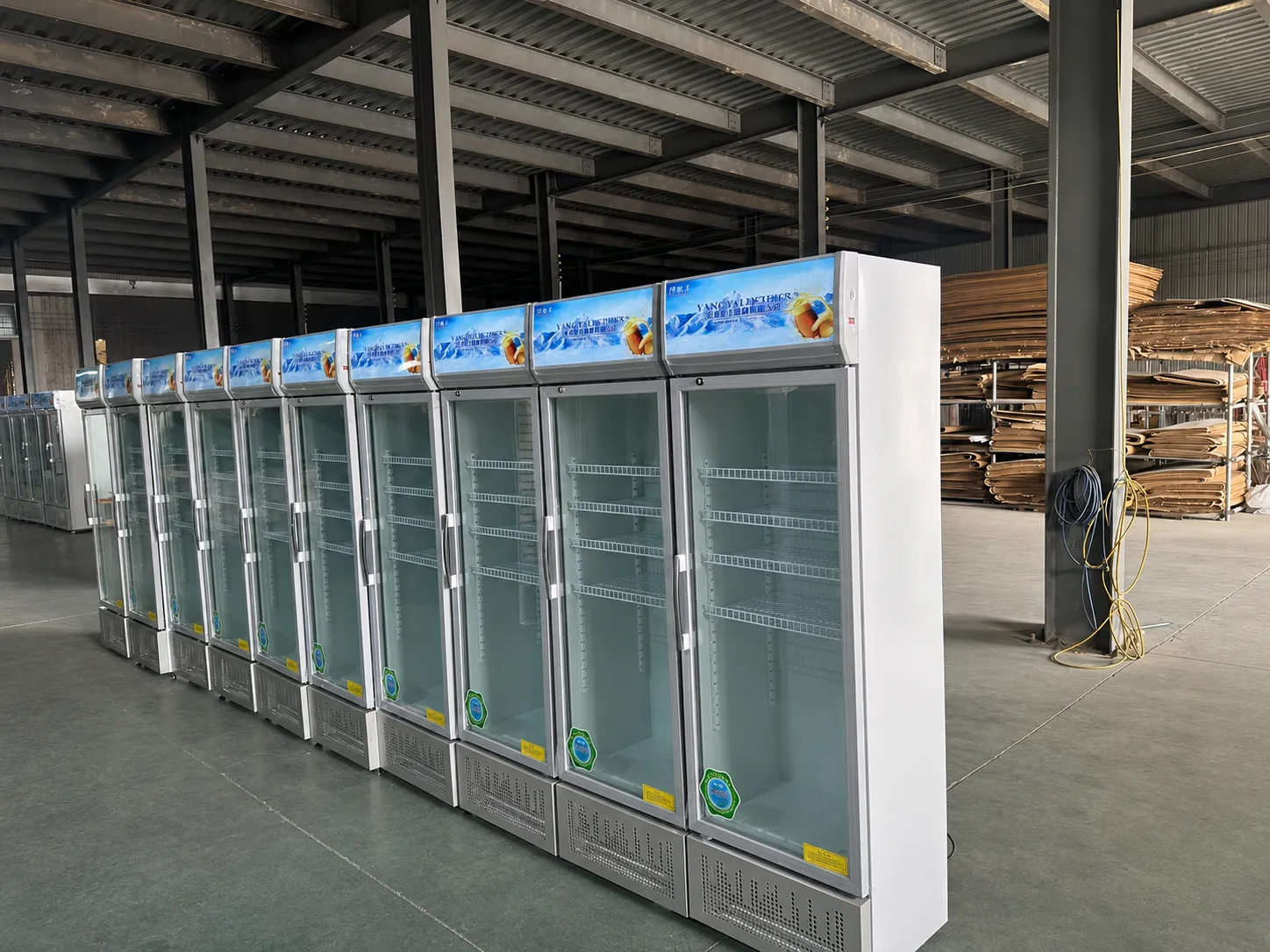
Both glass types are tempered and both are marketed as anti-fog, but the mechanism is different, and that difference shows up specifically in humid climates. Coated anti-fog glass uses a surface treatment that resists condensation under normal conditions. Heated-wire demisting glass runs a low-voltage heating element through the pane itself, which is rated for 100% defog performance regardless of ambient humidity.
The trade-off: heated-wire glass draws a small amount of continuous power to run the heating element, while coated glass draws none. For a bar in a dry or moderately humid market, coated anti-fog glass is usually sufficient and simpler. For coastal, tropical, or high-humidity venues — or any bar near an outdoor patio door that cycles humid air — heated-wire demisting glass is the safer spec, because coating alone can lose effectiveness once ambient humidity climbs past what the coating was designed to resist.
This is the edge case most roundup pages miss entirely: they list “anti-fog glass” as a single feature rather than two different technologies with a real climate-dependent trade-off.
Regardless of door count, height, or glass type, every unit in this line ships with: 2–10 °C temperature range, air-cooled frost-free operation, a three-color LED strip, adjustable interior shelving, and an optional heavy-duty caster upgrade for units that need to be repositioned during deep cleaning or event setup. None of these vary by configuration — they’re the baseline, not a differentiator between models.
Buyers frequently size a heightened 2010 mm unit purely on bottle-count math without checking what’s above the bar-back run. A 180 mm height difference is small enough to overlook on a spec sheet and large enough to hit a soffit, a hanging glass rack, or a low ceiling in an older building. Measure the clearance above your intended bar-back position before ordering the heightened series — not just the floor footprint.
Units in this line carry CE marking, RoHS compliance, and ISO 9001-managed production. Commercial refrigerating appliance safety design in this category generally follows IEC 60335-2-89, which sets the safety requirements bar and beverage coolers with an incorporated condensing unit are typically evaluated against — a reasonable reference point for a hospitality group’s procurement checklist. Certificate numbers for a specific order are confirmed on request, not published as a general figure.
Pricing isn’t published for any door count, height class, or glass configuration in this line. It’s quoted per project once door count, height, glass type, and destination market are confirmed — request a quote rather than working from a listed price bracket.
A: Not always. Coated glass performs adequately in dry-to-moderate humidity and draws no extra power. Heated-wire glass is the safer choice specifically in high-humidity or coastal venues where coating alone may not hold up.
A: Roughly one additional shelf tier of capacity on the 2010 mm heightened series, at the cost of a taller footprint that needs checking against ceiling or soffit clearance.
A: For high-turnover, high-SKU-variety bars, yes — each door opening exposes less of the total cabinet to warm air. For a narrow, high-volume SKU list, fewer wider doors can work just as well.
A: Yes, voltage, plug standard, exterior finish, and branding are available as OEM/ODM options across the line.
2026-09
Commercial grade refrigerator" is one of the most searched phrases by restaurant owners, s…
2026-09
Glass door construction, not door count or cabinet size, is what actually fails first in a…
Le responderemos en un plazo de 24 horas. Si es un caso urgente, por favor añada WhatsApp/WeChat: +8617806295551. O llame directamente a +8617806295551/+8617660987312.
*Respetamos su confidencialidad y toda la información está protegida.
Sólo utilizaremos sus datos para responder a su consulta y nunca le enviaremos correos electrónicos o mensajes promocionales no solicitados.