






Medication Refrigerator Guide: Medical Refrigerators and Freezers for Pharmacy & Vaccine Storage
Learn how to choose a medication refrigerator by temperature range, vaccine storage needs,…

 14:01
14:01 Poor medication storage can expose temperature-sensitive products to damaging conditions, trigger alarms, create costly spoilage, and disrupt pharmacy or clinic operations. A purpose-built medication refrigerator helps solve this by providing stable cold storage, monitoring, security, and a layout designed around professional healthcare use.
A medication refrigerator is a medical or pharmaceutical cold-storage unit designed to hold temperature-sensitive medicines, vaccines, and related healthcare products within their specified storage conditions. For vaccine storage, many refrigerator-stored vaccines require 2°C to 8°C, but buyers must always follow each product’s labeling and local regulations.
A medication refrigerator is a specialized cold-storage appliance used to refrigerate medicines, vaccines, biological materials, and other temperature-sensitive medical products. Depending on the market and application, the same general equipment category may also be called a medical refrigerator, medicine refrigerator, medication fridge, pharmaceutical refrigerator, pharmacy refrigerator, medical fridge, or vaccine storage refrigerator.
The key difference is purpose. A pharmacy or clinic does not simply need a cabinet that feels cold. It needs refrigeration that can support precise temperature control, documented storage conditions, appropriate air circulation, and operational safeguards.
That is why professional buyers commonly search for:
For B2B buyers, the name matters less than whether the unit matches the storage requirements of the products inside.
Medical refrigeration should be selected around the medicine, vaccine, monitoring plan, and regulatory environment—not around a household refrigerator specification.
Senlisi’s current Réfrigérateurs pour la pharmacie et le secteur médical range is designed for professional applications such as pharmacies, hospitals, clinics, and laboratories. Senlisi also offers a dedicated pharmacy and medical refrigerator overview for buyers evaluating medical cold-storage solutions.
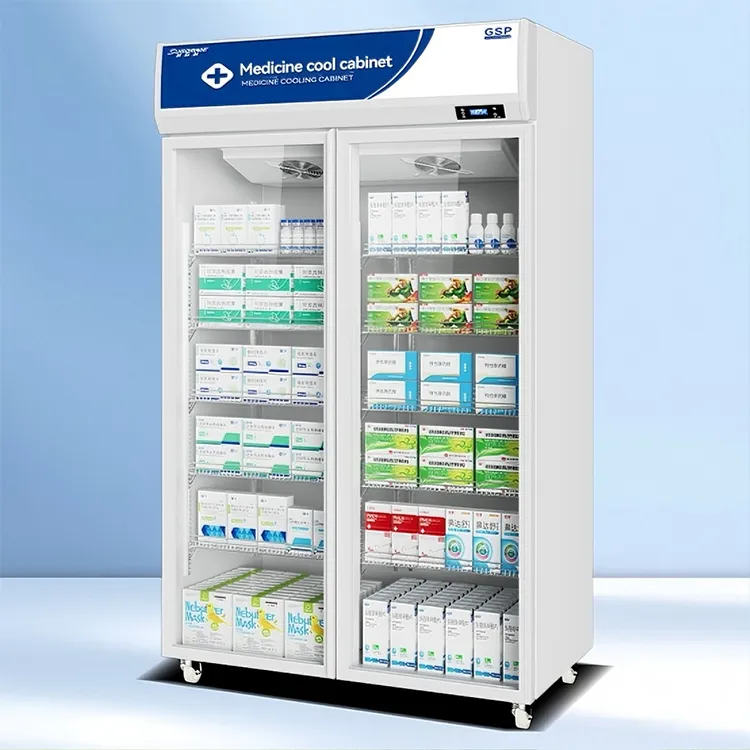
Many vaccines licensed for refrigerated storage must remain between 2°C and 8°C (36°F to 46°F). CDC also notes that some vaccine products have different storage requirements, so the manufacturer’s package insert or applicable healthcare-provider fact sheet must always be checked.
This distinction is important. A search for fridge temperature pharmacy may suggest there is one universal pharmacy setting. There is not. Different medicines, vaccines, biologics, and other products can have different approved conditions.
For vaccine applications, CDC recommends a refrigerator range of 2°C to 8°C and suggests a midpoint setting such as 5°C as a way to reduce the risk of excursions, while actual conditions must be verified through monitoring.
Temperature excursions can threaten the integrity and effectiveness of temperature-sensitive products. Some refrigerated vaccines can lose potency if frozen, while excessive warmth may also damage products. CDC specifically warns that certain liquid vaccines can permanently lose potency after freezing.
Potential consequences include:
The goal is therefore not simply to reach a specific temperature.
The goal is to maintain temperature stability throughout normal use.
That includes:
A suitable medical refrigeration system needs both cooling capacity and control.
This is one of the most important distinctions for healthcare buyers.
A household mini fridge or personal refrigerator may look convenient because it is small and inexpensive. However, that does not make it an appropriate vaccine-storage unit.
CDC’s 2026 Toolkit says never use dormitory- or bar-style combined refrigerator/freezer units for vaccine storage because they pose a significant freezing risk.
CDC also ranks purpose-built and pharmaceutical-grade equipment above household-grade storage. Purpose-built units are specifically designed for vaccine storage and can be compact, undercounter, or large.
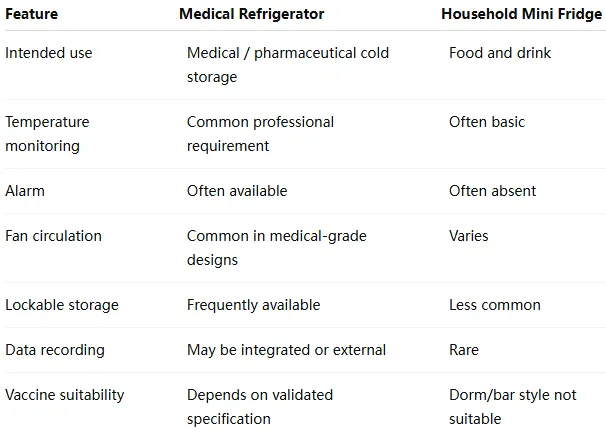
A mini medical fridge can still be useful when it is actually designed and validated as medical equipment.
The key word is not “mini.”
It is medical.
A small medical refrigerator with lock may be appropriate for a clinic with low inventory, while a large pharmacy may need a full-height cabinet with multiple shelves and higher capacity.
The same principle applies to a compact refrigerator or countertop medical refrigerator: compact size does not remove the need for stable temperature performance.
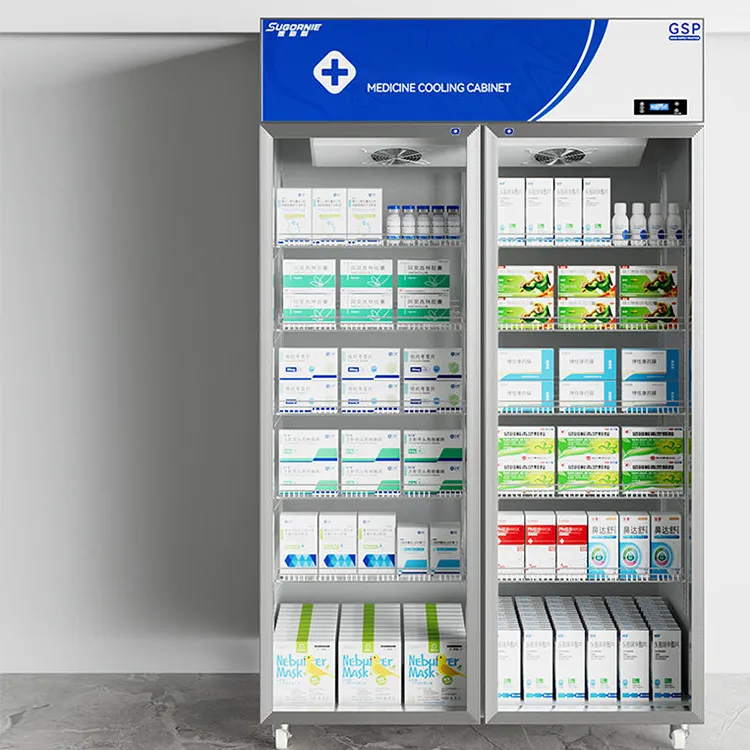
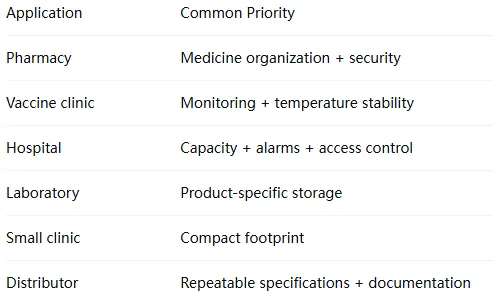
Different healthcare environments have different storage needs.
A pharmacy may hold many packaged medicines. A vaccination clinic may prioritize vaccine inventory and continuous monitoring. A laboratory may need a different cabinet layout for specimens or reagents.
A pharmacy refrigerator or pharmaceutical refrigerator can support organized medicine storage in:
Lockable doors and adjustable shelving can help organize stock and control access.
Vaccine refrigerators are selected around vaccine-storage requirements, monitoring, and cold-chain procedures.
For U.S. vaccine storage, CDC states that each vaccine-storage unit must have a temperature monitoring device, and digital data loggers provide continuous records of storage temperatures and excursion duration.
Lab refrigerators and laboratory refrigerators may store reagents, diagnostic materials, or other temperature-sensitive laboratory products.
Do not assume every medicine refrigerator is automatically suitable for every laboratory application. The required temperature range, materials, security, and certification can differ.
A glass door can help staff see inventory without opening the refrigerator.
That can improve stock checks, but the complete unit still needs suitable insulation and temperature performance.
Compact and Countertop Units
A countertop or compact medical refrigerator can work in:
A larger cabinet may be better when storage volume is high.
A professional medical refrigerator needs more than a digital number on the front panel.
For vaccine storage, CDC says every storage unit must have a temperature monitoring device. It describes a digital data logger as a device capable of continuous monitoring and recording temperatures at preset intervals.
That information is important because a simple display only shows what is happening now.
A logger can help show:
An alarm can warn staff when conditions move outside the programmed limits.
Depending on the model and project, alarm systems may cover:
For critical applications, buyers should ask exactly what the alarm does.
Does it only beep locally?
Can it record an event?
Does it support remote notification?
Can alarm data be exported?
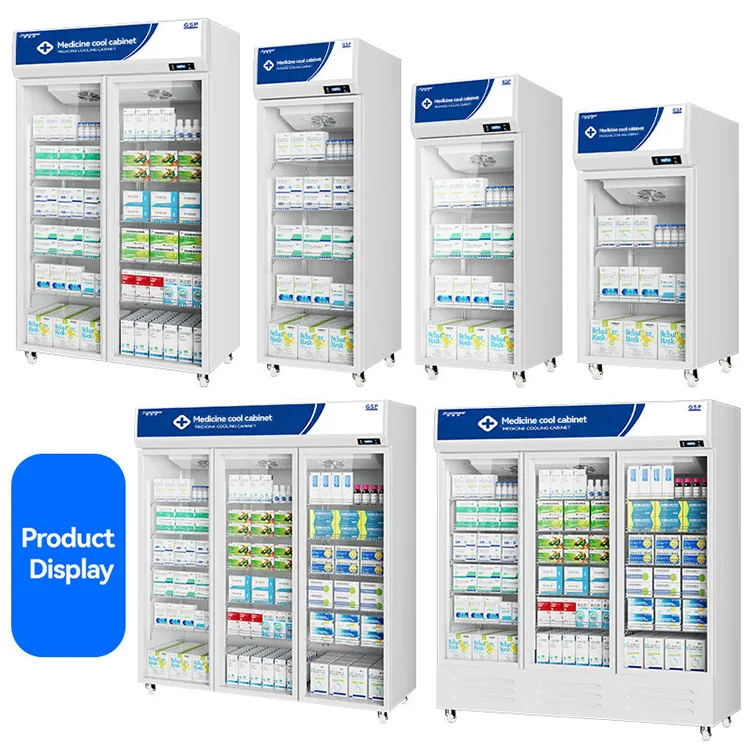
Senlisi’s current SLS-YP1200 refrigerated medicine cabinet is listed with a 2°C–8°C range and USB data export for saving temperature data. This is one example within Senlisi’s medical-refrigeration category rather than a specification for every model.
For buyers looking for reliable temperature control, the most useful questions are often:
Monitoring turns cooling into documented cold storage.
Some healthcare facilities need both refrigeration and freezing.
However, the required temperatures depend on the products being stored.
Specific vaccines may have narrower or different requirements, so product labeling must always take priority.
This is why buyers search for medical refrigerators and freezers, medical freezers, medical-grade refrigerators and freezers, and pharmacy refrigerator freezer solutions.
CDC notes that some purpose-built storage units can provide both refrigeration and freezing, while others are specifically designed for one function.
A combination design can save floor space, but buyers should verify:
A pharmacy freezer or pharmacy freezers may be required for specific frozen products.
Do not assume a standard freezer compartment inside a refrigerator can safely replace a dedicated medical freezer.
Blood products are a separate healthcare storage application with product-specific standards and operational requirements.
A general medication refrigerator should not automatically be specified for blood storage. Buyers should identify the exact product, required temperature range, and applicable regulations before selecting equipment.
Search terms such as portable medical refrigerator, portable refrigerators, medication cooler, travel refrigerator, and insulin cooler travel often reflect a different need from fixed pharmacy refrigeration.
A portable unit may be intended for:
But transport storage is not the same as permanent pharmacy storage.
CDC’s vaccine guidance distinguishes qualified transport containers and portable vaccine refrigeration from ordinary food or beverage coolers. Its 2026 Toolkit specifically states that food/beverage coolers are not appropriate vaccine transport systems.
Some portable units may use a rechargeable battery or rechargeable power source.
For B2B buyers, ask:
A portable medication cooler should never be selected only because it can become cold.
For vaccines, the container and packout should be validated for the required transport conditions.
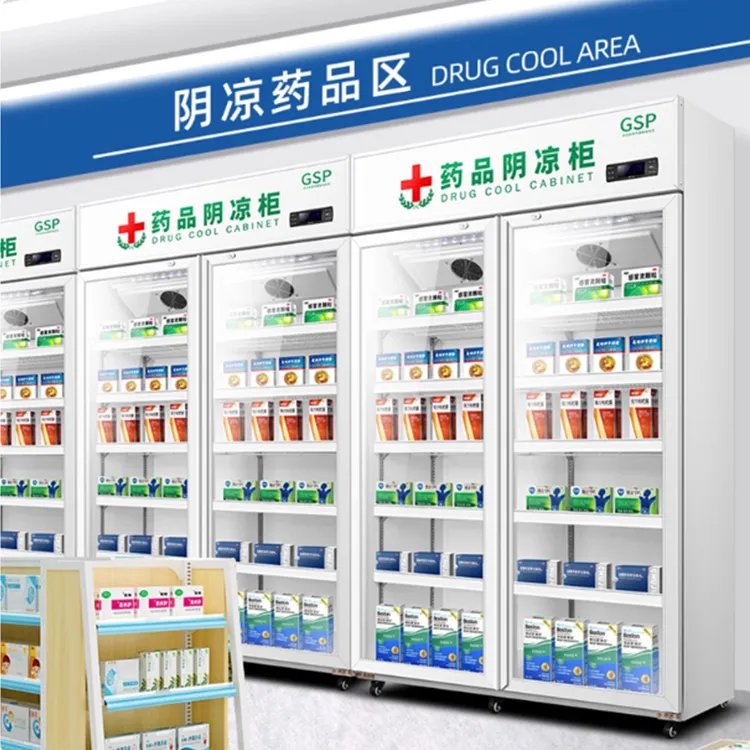
A medical refrigerator needs enough space for the maximum expected inventory without crowding.
CDC warns that crowding blocks cold-air circulation and can cause temperature fluctuations.
That makes usable capacity more important than a simple cu.ft number.
Match Capacity to Inventory
Consider:
A small refrigerator may suit a clinic.
A larger upright unit may be more practical for a pharmacy or hospital.
A lockable refrigerator can help restrict access to valuable or controlled inventory.
For buyers searching for a small medical refrigerator with lock, check both the lock and the underlying medical-storage performance.
Security should not substitute for temperature stability.
CDC’s current vaccine guidance recommends good air circulation around the outside of storage equipment and following the manufacturer’s placement instructions. It also notes that most units perform best under normal indoor room conditions, typically around 20°C to 25°C.
That means outdoor use should never be assumed.
If a unit is needed in a mobile, outdoor, or unusually hot environment, verify that the model is rated for those conditions.
For U.S. projects, some facility specifications may call for a hospital grade cord or hospital-grade plug.
This should be treated as a project requirement rather than assumed as universal. Ask the purchaser, electrical consultant, or facility manager what is required in the destination market.
Searches for medical refrigerator price, pharmacy refrigerator for sale, or pharmacy refrigerator cost show strong buying intent.
However, unit price tells only part of the story.
Two medical refrigerators may look similar but differ in:
Some buyers search for competitor brands such as Accucold when researching medical refrigeration.
For a B2B sourcing project, a brand name is less useful than a specification.
Compare:
temperature + monitoring + alarm + capacity + security + certification + service + landed cost
That makes supplier comparisons more objective and keeps the purchasing process focused on operational requirements.
Senlisi is a global commercial refrigeration manufacturer and exporter based in Qingdao, China. Its product portfolio includes commercial refrigerators, freezers, display cabinets, and dedicated Pharmacy & Medical Refrigerators for professional markets.
For medical applications, Senlisi’s current product pages position the range for pharmacies, hospitals, clinics, and laboratories, with features focused on temperature control, monitoring, and medicine storage.
Buyers can explore:
A professional inquiry should include:
There is no universal temperature for all medicines. Follow each product’s labeling. For vaccines licensed for refrigerator storage, CDC’s general recommended refrigerator range is 2°C to 8°C (36°F to 46°F).
CDC says dormitory- or bar-style combined refrigerator/freezer units should never be used for vaccine storage because they pose a significant freezing risk. Purpose-built or pharmaceutical-grade equipment is preferred.
The terms often overlap. A pharmacy refrigerator emphasizes medicine storage in pharmacies, while medical refrigerator is a broader term covering healthcare, clinic, hospital, laboratory, and vaccine applications. The required specification should be based on the stored product and applicable rules.
Yes. CDC’s 2026 vaccine-storage guidance states that every vaccine-storage unit must have a temperature monitoring device, and it describes digital data loggers as providing continuous temperature records.
Only if the transport system is appropriate and qualified for the vaccine and required temperature range. CDC distinguishes qualified containers and portable vaccine refrigeration from ordinary food or beverage coolers.
Provide the stored product, required temperature range, capacity, monitoring needs, alarm requirements, door type, lock requirement, destination country, voltage, certification needs, quantity, and any OEM customization requirements.
2026-08
Learn how to choose a medication refrigerator by temperature range, vaccine storage needs,…
2026-08
A poor food display can hide your best products, waste valuable counter space, and allow t…
Nous vous répondrons dans les 24 heures. En cas d'urgence, veuillez ajouter WhatsApp/WeChat : +8617806295551. Ou appelez directement +8617806295551/+8617660987312.
*Nous respectons votre confidentialité et toutes les informations sont protégées.
Nous n'utiliserons vos informations que pour répondre à votre demande et n'enverrons jamais de courriels non sollicités ou de messages promotionnels.