






How to Choose a Commercial Back Bar Cooler or Glass Door Beverage Refrigerator
Compare bar coolers, back bar and undercounter designs, beer temperature needs, glass door…
 11:40
11:40 Warm drinks, crowded shelves, and doors that block staff can slow a busy bar. Buying the wrong cabinet adds costly layout problems. This guide helps you choose bar cooling equipment by checking its location, usable space, temperature needs, and service access before you order.
Choose a commercial back bar cooler or glass door beverage refrigerator by matching its dimensions, installation requirements, usable bottle capacity, temperature range, and door layout to your operation. Confirm ventilation, power supply, cleaning access, and support before purchasing. An undercounter cabinet and a tall upright display cabinet serve different layouts, even when both store beer.
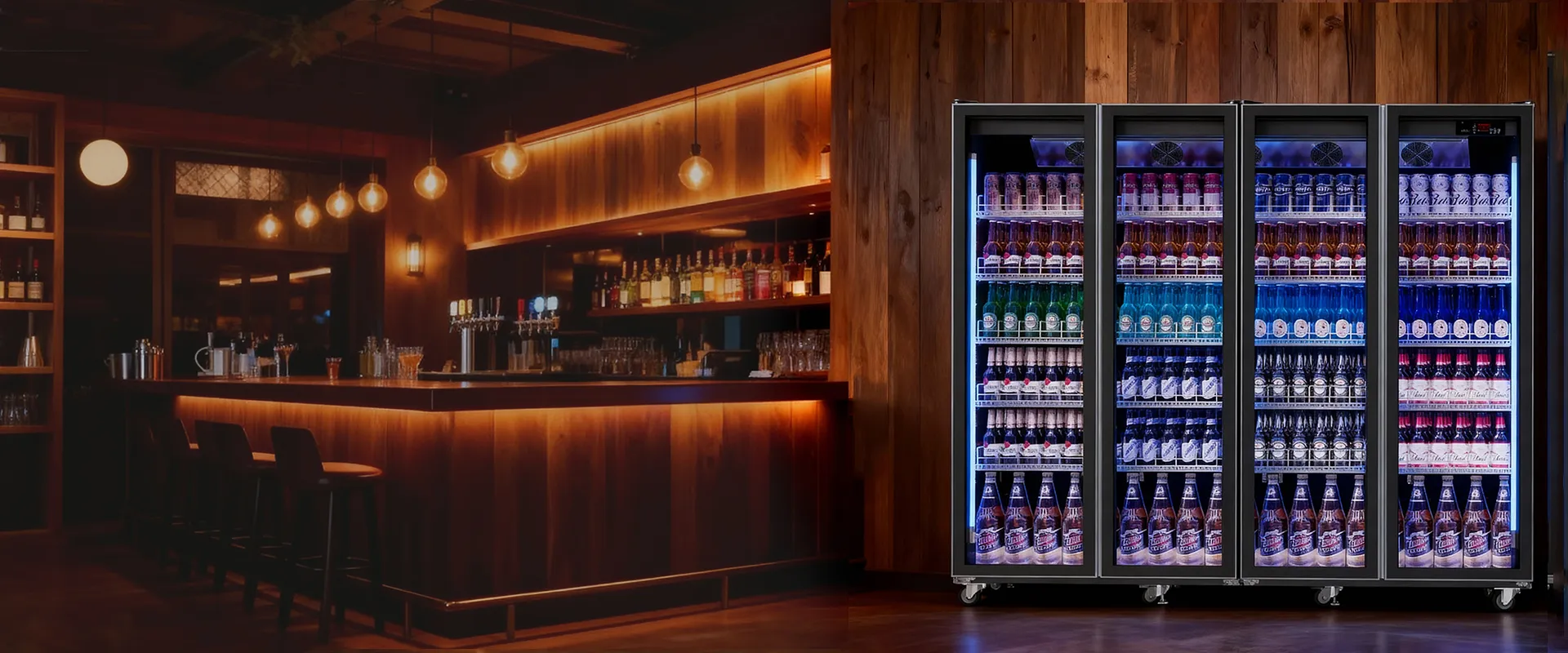
Bar Beer Cooler
A cooler in a bar is a refrigerated cabinet used to keep drinks cold and ready for service. It may hold bottled beer, cans, mixers, or other packaged drinks. The name describes its role, rather than one fixed shape. A small cabinet beside the bartender and a tall display unit behind the service area can both support the same operation.
Before comparing bar coolers, decide what the equipment must do. Is your priority fast staff access, customer-facing display, or extra chilled stock? A back bar refrigerator serves the area behind the bar, while a bottle cooler may use upright, low-height, or horizontal construction. Do not assume that every product with a similar name will fit the same position.
For a hotel, restaurant, or beverage retailer, this choice also affects daily work. Staff should reach popular drinks without crossing a busy route. Customers should see the products you want to display. Our starting point at Senlisi is your intended application: share the location, drink sizes, and available space so the proposed cabinet can be checked against the task.
| Equipment type | Main purchasing purpose | First check |
| Low-height back-bar cabinet | Drinks within the bartender’s working area | Height, door movement, and ventilation |
| Undercounter unit | Storage beneath an existing counter | Complete installation dimensions |
| Tall upright display unit | Visible chilled stock with vertical storage | Total height and service access |
| Horizontal bottle storage unit | Top-access storage for packaged drinks | Lid access and internal organization |
| Keg dispensing equipment | Storage and dispense of draught beer | Keg fit and dispensing system requirements |
These are equipment types to compare, rather than a claim that every design is available in our current range.
The words back bar describe a location or service role. The word undercounter describes a physical fit beneath a counter. A low-height unit can meet both descriptions, but a tall cabinet cannot. This distinction matters when you compare back bar beer coolers with the upright beer cabinets published on our website.
An undercounter bar refrigerator needs more than a suitable cabinet height. Measure the opening, account for legs or castors, and follow the required ventilation clearances. Check where warm air leaves the machine. A freestanding unit should not be enclosed unless its installation instructions permit that arrangement. The same check applies when a quotation describes an under bar cooler as suitable for a fitted cabinet opening.
Searches for under bar beer coolers or a back bar cooler under counter often lead buyers to low-height products. However, Senlisi’s published beer cabinet range includes tall upright models. For a counter height beverage refrigerator, send the actual opening dimensions and request a confirmed proposal. Treat custom sizing or built-in suitability as a specification to agree, rather than an assumed standard feature.
Measure these points before asking for a quote:
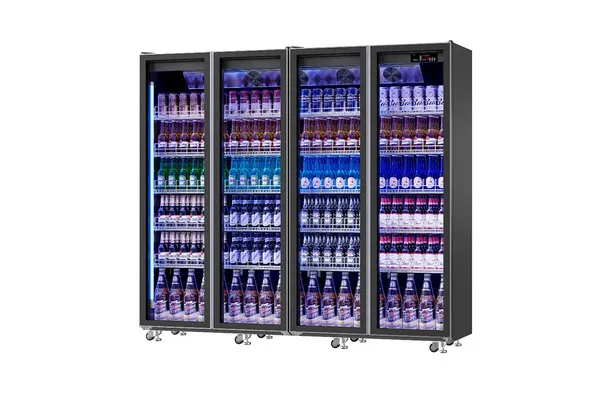
Choose capacity around your busiest service period and your restocking routine. Total litres or cubic feet are useful for comparison, but they do not tell you how many sellable drinks fit on the shelves. Bottle height, can diameter, shelf spacing, and internal fittings all affect usable storage. Ask for a layout that reflects your own product mix.
A beverage refrigerator should hold the required chilled stock without blocking its designed airflow. Keep fast-moving lines within easy reach and separate them from reserve items where space allows. For a multi-site buyer, using a consistent shelf plan can make staff training and replenishment simpler. Still, each venue needs a check of its available space and expected demand.
Consider a planning example, rather than a performance promise: a venue expects to sell 120 packaged drinks during a peak period and can replenish chilled stock halfway through it. Its service cabinet may need less ready-to-sell storage than a venue that cannot replenish during service. Warm incoming stock changes the calculation. Confirm chilling and recovery performance before relying on a cabinet to cool a large delivery quickly.
| Planning question | Information to provide | Why it affects selection |
| What will you stock? | Bottle and can dimensions | Determines shelf arrangement |
| How much sells at peak time? | Expected units by product | Guides ready-to-serve stock |
| When can staff replenish? | Restocking frequency | Changes required service capacity |
| Is incoming stock already cold? | Delivery temperature | Affects the cooling workload |
| How many locations need equipment? | Site count and layouts | Supports consistent purchasing |
A glass door beverage refrigerator lets staff and customers view products before opening the cabinet. This can help with product selection and presentation. A solid door beer fridge can suit storage where visibility is less important. Compare the whole cabinet, including insulation and test data, before drawing conclusions about energy use from the door material alone.
Door movement deserves equal attention. Hinged doors need space in front of the cabinet. Sliding doors may suit a tighter aisle, but their opening arrangement changes access to each section. A horizontal bottle cooler with sliding lids uses a different loading method again. Check how staff will retrieve drinks and clean the interior, rather than choosing from a photograph alone.
If you need a bar cooler with 3 glass doors, compare individual door width, shelf access, and placement of fast-selling products. A cooler with 3 glass doors may offer useful display space, but a wider cabinet is only helpful when it fits the room and the stock plan. Ask for the actual door specification, including tempered glass, seals, and any demisting system offered for that model.
The correct setting depends on the beer, packaging, and service method. Follow the brewery or distributor’s storage instructions, then verify that the cabinet maintains the required product temperature. Its adjustable range is not a universal recommendation for every drink. Storage temperature and the preferred temperature in a customer’s glass can also differ.
For draught systems, the Brewers Association’s Draught Beer Quality Manual recommends keeping kegs cold and identifies approximately 38°F, or 3.3°C, as an important dispensing reference. This guidance concerns draught operation; it does not turn a packaged-drink cabinet into keg dispensing equipment. Beer style and supplier instructions remain important for bottled and canned products.
Check temperature under the conditions you expect: stocked shelves, repeated door openings, and the room’s ambient temperature. A controller display reports what its sensor measures, which may differ from the drink temperature. Use a suitable measurement method agreed with the supplier. Ask how the unit recovers after opening, and avoid placing stock where it blocks air passages or contacts surfaces the manual says to keep clear.
Our Bar Beer Coolers category includes upright cabinets with multiple door configurations. The published descriptions identify air-cooled, frost-free operation and a listed range of 2–10°C for the examples below. They also describe coated-glass or heated-glass approaches to demisting, depending on the model. Confirm the selected configuration in the quotation.
| Published model | Door configuration | Listed dimensions, mm | Listed temperature range |
| SLS-PFG04 | Four doors | 2225 × 600 × 2010 | 2–10°C |
| SLS-PFG03 | Three doors | 1860 × 600 × 2010 | 2–10°C |
| SLS-PFGC02 | Two doors | 1260 × 600 × 2010 | 2–10°C |
These dimensions are taken from the category descriptions and need confirmation against the final model drawing. They identify tall cabinets, so they should not be specified as undercounter equipment. Width and door count offer a starting point for comparison; usable capacity, power, shelf loading, and installation requirements still need model-specific confirmation.
For a project that needs a compact commercial back bar cooler, share your limits before choosing from the display range. At Senlisi, we provide commercial refrigeration equipment and accept enquiries for customized solutions. A request for a special height, finish, or layout should lead to an agreed specification. We do not treat an enquiry alone as confirmation that a particular construction is available.
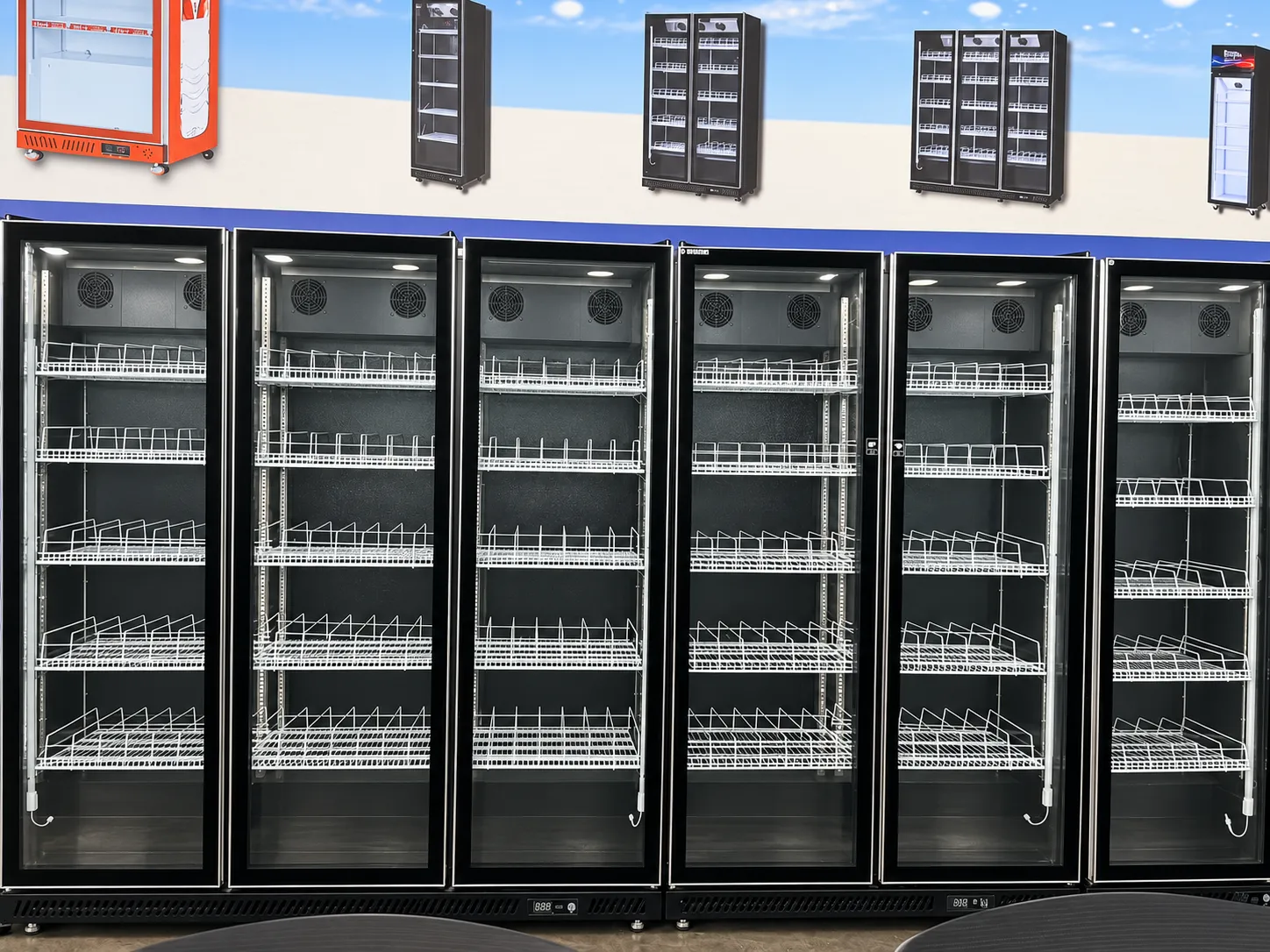
Beer Cooler
An energy efficient beer cooler should be assessed using relevant evidence. Compressor claims alone do not establish electricity consumption. Ask for measured energy use and the test conditions, including ambient temperature, cabinet setting, and door-opening procedure where available. Compare models under equivalent conditions and identify the applicable requirements for your destination market.
Installation also affects operation. Heat sources, blocked vents, poor seals, and unsuitable loading can increase the cooling workload. Leave the specified ventilation space and follow the cleaning schedule. For an efficient beer cooler for bars, consider whether the cabinet can support the intended service pattern, rather than selecting the lowest purchase price or the largest stated capacity.
You can make a simple purchasing estimate with confirmed data: annual electricity cost = measured daily consumption in kWh × operating days × local electricity price. Add delivery, installation, cleaning, service, and likely downtime costs to your comparison. This is a planning calculation, not a guaranteed running cost. Avoid percentage savings claims unless the supplier identifies the comparison model and the supporting measurements.
Senlisi is based in Qingdao, China, and supplies commercial refrigerators, freezers, and display equipment for professional buyers. Our broader range supports supermarkets, foodservice, hospitality, and retail applications. For bar projects, the useful starting point is the drinks you sell and the space your team works in. That information helps define a suitable enquiry.
Send your layout, available dimensions, required temperature, destination country, and order quantity. Include bottle or can sizes and any requirements for glass, lighting, finish, or branding. If you are comparing a beverage cooler with a built-in design, say so clearly. The proposed installation must be checked before you approve a model.
Contact Senlisi to discuss a model or request a quotation through our official website. Attach photographs or a drawing of the intended position. For multiple venues, identify any layout differences between sites. A clear brief helps us discuss appropriate configurations and reduces the risk of ordering equipment that cannot support your service plan.
It is refrigerated equipment that keeps drinks cold and accessible for service. Depending on its design, it may sit behind the bar, beneath a counter, or in an upright display position. Choose the equipment type around your drinks, space, and staff workflow.
No. Beer coolers for bars include different cabinet shapes and heights. Only a model with suitable dimensions and approved installation requirements should go beneath a counter. A tall upright unit can serve a bar without being an undercounter product.
Follow the brewery or distributor’s instructions for your beer. Check actual product temperature as well as the controller setting. Draught dispensing commonly uses about 38°F, or 3.3°C, as a reference, while packaged beer requirements and preferred serving temperatures may differ.
Do not assume so. The manufacturer must permit the installation, with suitable heat removal, clearances, electrical access, and service access. Provide the opening dimensions and request written confirmation before enclosing a cabinet beneath or within furniture.
Estimate peak drink sales, restocking frequency, and the temperature of incoming stock. Check usable shelf space, door access, and performance under repeated opening. Select capacity around the service workload rather than advertised volume alone.
Senlisi accepts customization enquiries. Send your size, finish, branding, electrical, and installation requirements for discussion. Available options, minimum quantity, price, and timing need confirmation for the proposed model and order.
2026-10
Compare bar coolers, back bar and undercounter designs, beer temperature needs, glass door…
2026-09
The SLS-ZD1860 Combo Island Cabinet measures 1860 × 810 × 800 mm and lists a temperature r…
We will reply you within 24 hours. If for urgent case, please add WhatsApp/WeChat: +8617806295551. Or call +8617806295551/+8617660987312 directly.
*We respect your confidentiality and all information are protected.
We will only use your information to respond to your inquiry and will never send unsolicited emails or promotional messages.