





Commercial Refrigerated Beverage Cabinets: Back Bar Cabinets, Beverage Fridges & Display Solutions
A poorly planned beverage area can create more than a storage problem. Warm drinks, limite…

 10:36
10:36 Warm beer, slow service, and messy bottle storage can quickly hurt a busy bar. The problem becomes worse during peak hours when staff open the refrigerator again and again. A properly selected back bar cooler keeps drinks cold, organized, visible, and within easy reach.
Bar beer coolers are commercial refrigeration cabinets designed to chill, organize, and display beer bottles, beer cans, and other beverages behind a bar. The right model should provide stable temperature control, enough storage capacity, fast cooling recovery, convenient door access, durable shelves, and an installation size that fits the bar area.
Refrigeradores de cerveja para bares are commercial refrigerators made for storing and serving bottled or canned drinks. Operators usually place them behind the bar, under a counter, or beside the main service station. Their low cabinet height allows bartenders to reach drinks without leaving the serving area.
This type of equipment may also be called a back bar cooler, bottle cooler, bar refrigerator, beer cooler, beverage fridge, or commercial back bar refrigerator. These names often overlap, but product designs can differ. Some cabinets focus on visible bottle display, while others focus on larger refrigerated storage and fast staff access.
The U.S. Department of Energy includes bottle coolers, back-bar coolers, undercounter refrigerators, and beer-dispensing units within commercial refrigeration purchasing guidance. This distinction matters because commercial units are designed for professional operating conditions rather than light household use. DOE purchasing guidance provides more details.
A commercial unit may include:
Unlike a small household beer fridge, commercial beer coolers must handle frequent door openings, changing product loads, and long daily operating hours.
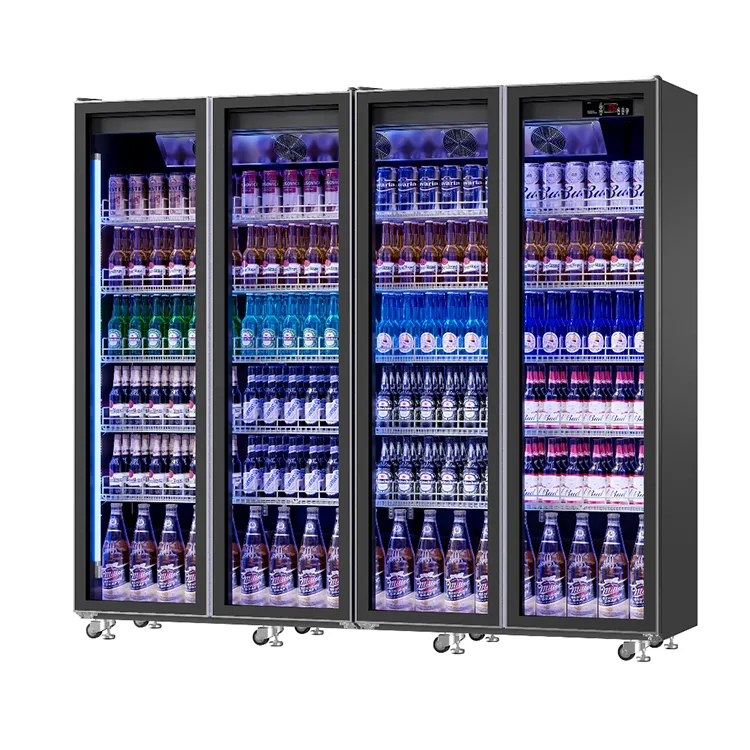
A well-positioned back bar cooler helps bartenders work faster. Staff can see, reach, and replace drinks without walking to a separate storage room. That small improvement becomes valuable when hundreds of orders pass through the same station each night.
Good organization also reduces mistakes. Different shelves can hold lager, craft beer, soft drinks, sparkling water, juice, mixers, and ready-to-drink products. When bottles and cans remain chilled and organized, staff spend less time searching and more time serving customers.
A back bar cabinet can support three important business goals:
A transparent door back bar cabinet adds visual value. Customers can see the available brands, while bartenders can check stock before opening the door. This can reduce unnecessary searching and make replenishment easier.
The placement also matters. A cabinet installed directly behind a bar can shorten staff movement. However, the doors must open without blocking narrow work areas. Sliding doors may suit tight spaces, while hinged doors may provide wider access when enough clearance is available.
For high-volume beverage service, buyers should map the actual workflow before ordering:
These questions help turn a basic refrigerator purchase into a better service solution.
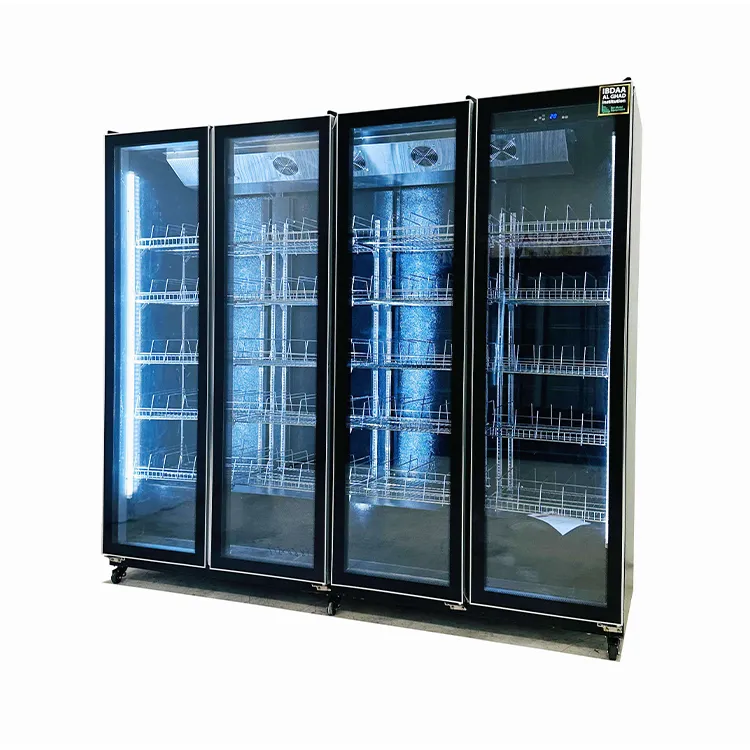
The correct bottle cooler configuration depends on floor space, sales volume, package size, bar design, and the number of staff using the station.
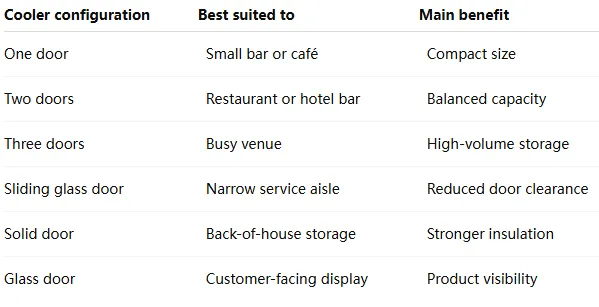
A single-door model works well in small cafés, hotel lounges, restaurants, reception areas, and compact bars. It provides focused storage without using too much counter width.
A compact beer fridge may also suit a secondary service point. However, buyers should confirm that it carries a commercial rating and can manage repeated door openings.
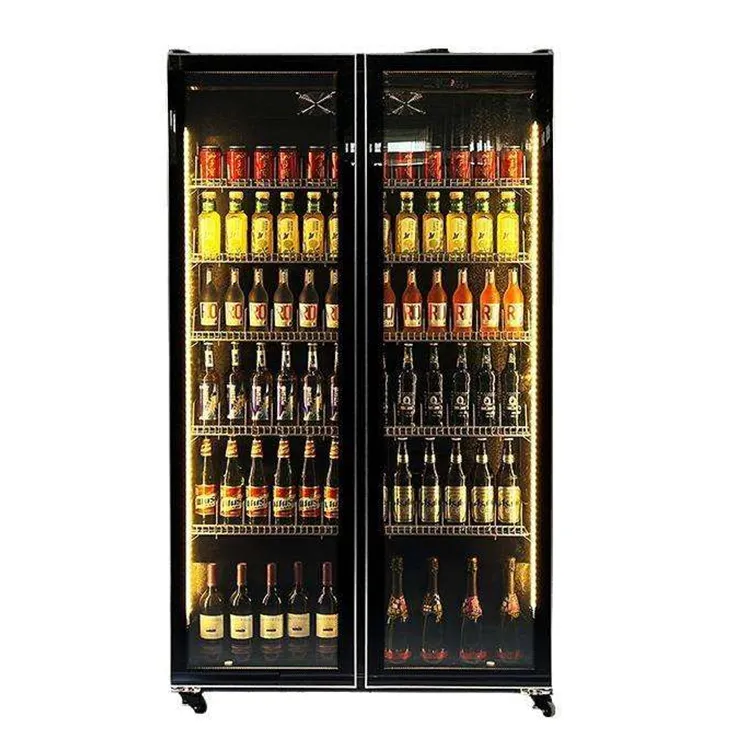
A two-door cabinet gives operators more shelf space and easier product separation. One section can hold beer, while the other stores water, soda, mixers, or juice.
This configuration is common in:
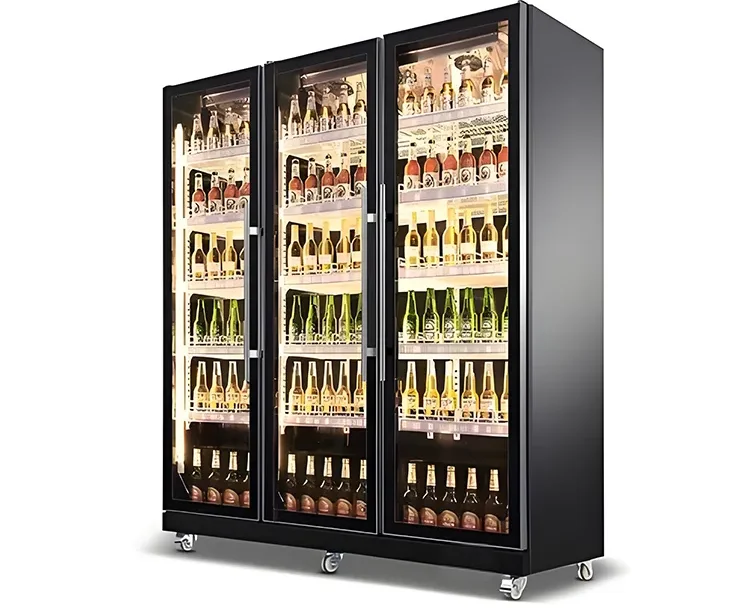
A three-section model supports a wider beverage range and larger service volume. Buyers sometimes describe this as a 3 glass door cooler. It provides a long display area but requires more installation space.
A large commercial back bar cooler may be appropriate when several bartenders need access at the same time. The operator can assign different sections to bottled beer, beer cans, soft drinks, and mixers.
A refrigerador de garrafas comercial should also have shelves that suit the actual packages. Tall beer bottles, short bottles, slim cans, and large mixer bottles need different shelf spacing.
Ask the supplier for an internal loading drawing. Outer cabinet dimensions alone do not show how many usable bottles and cans will fit inside.
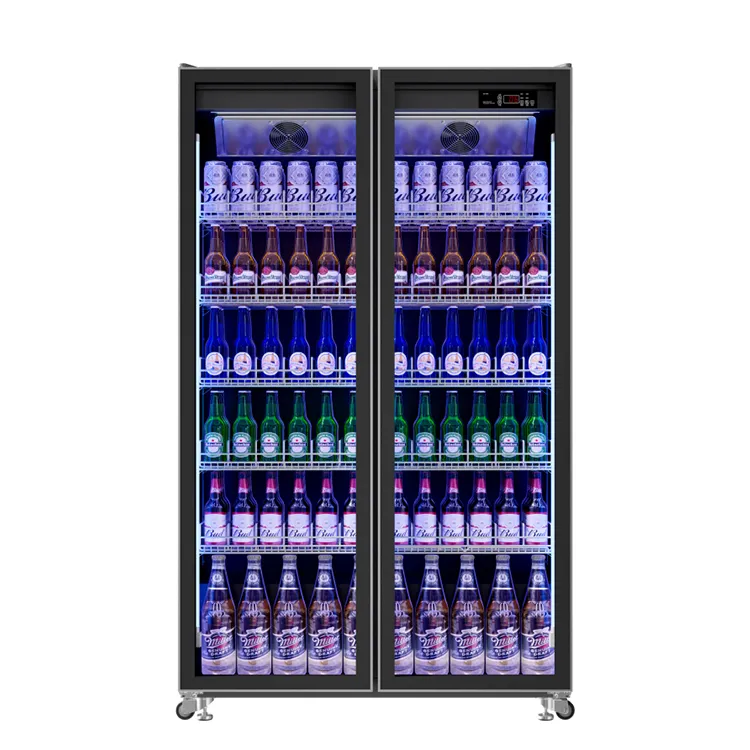
A glass door cooler allows staff and customers to see the products inside. It supports merchandising and helps bartenders locate drinks before opening the cabinet. This makes glass models popular in visible commercial bar installations.
A glass door back bar refrigerator may include double-pane or triple-pane glazing, anti-condensation features, self-closing hinges, internal lights, and locks. Buyers should check whether the glass remains clear under the expected humidity and ambient temperature.
Glass doors are usually suitable when:
A solid door model hides the products but may offer strong thermal performance. It can work well in a preparation area where appearance matters less than storage efficiency.
Solid doors are often suitable when:
Some buyers select a cooler in black for a modern lounge or nightclub. Others prefer a cooler in stainless steel for a professional kitchen, hotel bar, or foodservice environment. Both finishes can work well when they match the surrounding restaurant equipment.
An energy-efficient cooler can lower operating costs, but daily use also matters. Even an efficient model will consume more power when doors remain open, condenser coils become dirty, or the cabinet sits beside a heat source.
ENERGY STAR reports that certified commercial refrigerators and freezers are, on average, about 20% more energy efficient than standard models. Eligible equipment includes bottle coolers, back bar coolers, undercounter units, and beer-dispensing cabinets when they meet the relevant product requirements.
The Department of Energy also advises buyers to choose the correct cabinet size. Oversized refrigeration equipment can cost more to purchase and create unnecessary energy losses. It recommends closed merchandising cabinets with swinging or sliding doors instead of open units where practical.
Practical ways to use less energy
When comparing coolers for sale, request daily energy consumption under a named test condition. Also confirm the test temperature, ambient temperature, voltage, cabinet volume, and door type. A number without test conditions provides little value.
A back bar refrigerator and a kegerator serve different purposes.
A back bar cabinet stores packaged drinks such as bottles and cans. A kegerator stores a keg and connects it to a beer dispenser. It may include a tower, faucet, regulator, gas cylinder, coupler, and beer lines.
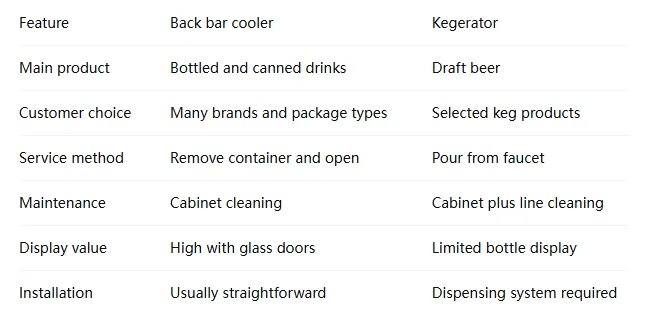
Choose a bottle cooler when the bar sells many packaged beverages. Choose a kegerator when draft beer forms an important part of the menu.
Many bars need both. A restaurant may use a commercial back bar unit for water, soda, cider, and bottled beer, while a separate draft system serves popular tap products.
The Brewers Association emphasizes that draft beer must remain consistently refrigerated from keg to glass. Poorly cooled lines can cause foaming, waste, and inconsistent pours.
A beer dispenser also requires regular line cleaning and system checks. Therefore, a kegerator is not simply another cold cabinet. It is part of a complete draft service system.
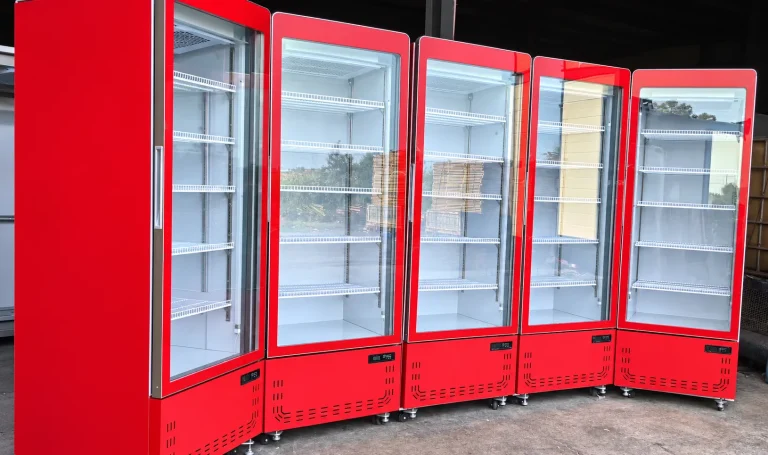
Importers, distributors, restaurant groups, hotel developers, and beverage retailers should look beyond the catalogue image. A successful order depends on technical matching, quality control, customization, packaging, documentation, and after-sales support.
At Senlisi, we recommend beginning with the application. Tell us whether the unit will operate in a restaurant, hotel, pub, supermarket, resort, café, nightclub, or institutional facility. Then explain what products it will store and how staff will use it.
Product questions to ask
Commercial questions to ask
Illustrative B2B procurement case
Consider a hotel group planning new bar equipment for 20 properties. The first request may simply say, “We need the best beer fridge for each hotel.”
After technical discussion, the real requirement becomes clearer:
This is an illustrative procurement example, not a claimed customer project. It shows why “best beer” equipment depends on the application. The best beer fridge for a small lounge may not be suitable for a high-volume commercial bar.
Senlisi is based in Qingdao, China, and manufactures commercial refrigerators, freezers, display cabinets, and customized refrigeration solutions for global B2B buyers.
Depending on the project, customization may include:
Our customers include supermarkets, grocery stores, convenience chains, restaurants, cafés, hotels, resorts, beverage distributors, healthcare institutions, and public sector organizations.
When you send us the destination market, quantity, cabinet size, beverage type, installation location, and expected operating conditions, we can help identify a more suitable commercial solution.
A back bar cooler is a low commercial refrigerator installed behind or beneath a bar counter. It stores beer, water, soda, juice, and mixers where bartenders can reach them quickly. Models may use glass, solid, hinged, or sliding doors.
A bottle cooler focuses mainly on bottled and canned drinks. A beverage cooler is a broader term that may also include countertop cabinets, upright display refrigerators, undercounter models, and other drink-storage equipment. In practice, the terms often overlap.
A household fridge may not be designed for frequent door openings, high ambient temperatures, heavy shelf loads, or long commercial operating hours. A commercial bar refrigerator is normally a safer choice for professional use.
A sliding glass door configuration works well where the service aisle is narrow. The doors do not swing into the bartender’s working space. However, only part of the cabinet can open at one time, so buyers should compare convenience with a hinged-door layout.
Staff should wipe spills and check the doors daily. Shelves, gaskets, drains, and internal surfaces need regular cleaning. The condenser should also be inspected and cleaned according to the manufacturer’s instructions and operating environment.
Provide the required dimensions, door quantity, expected storage capacity, beverage package types, voltage, plug, destination country, exterior finish, order quantity, installation location, and any OEM branding requirements.
2026-09
A poorly planned beverage area can create more than a storage problem. Warm drinks, limite…
2026-09
A refrigerator that looks small on a specification sheet may still fail in a real installa…
Responder-lhe-emos no prazo de 24 horas. Se for um caso urgente, adicione WhatsApp/WeChat: +8617806295551. Ou ligue diretamente para +8617806295551/+8617660987312.
*Respeitamos a sua confidencialidade e todas as informações são protegidas.
Apenas utilizaremos as suas informações para responder ao seu pedido e nunca enviaremos mensagens de correio eletrónico ou mensagens promocionais não solicitadas.