






How to Choose a Commercial Back Bar Cooler or Glass Door Beverage Refrigerator
Compare bar coolers, back bar and undercounter designs, beer temperature needs, glass door…
 08:58
08:58 Selling meat from the wrong cabinet hurts twice. It weakens product presentation, and it can make temperature control harder. A dual temperature meat hanging cabinet gives you cleaner display, better zoning, and a smarter way to manage fresh and frozen meat in one sales line.
A dual temperature meat hanging cabinet is a commercial cabinet designed to display and hold meat in two controlled temperature zones. It is best for butcher shops, supermarkets, and foodservice counters that need both presentation and preservation. Senlisi’s SLS-GG1200 model is built as a double-door, dual-temperature meat hanging unit with a -18°C to 8°C temperature range, copper-tube cooling, and a 500 kg load capacity for commercial use.
A normal cabinet may only cool. A dual temperature curing cabinet or hanging meat cabinet does more. It helps you split products by storage need, selling speed, or display priority. On Senlisi’s product page, the SLS-GG1200 is shown as a double-door model with dual temperature control, double rods, and a large hanging load for front-of-store meat sales and display.
That makes it useful for stores that handle more than one product condition at the same time. One side can support chilled or near-ready meat presentation, while the other side can support colder holding. For many buyers, this is why the search journey often mixes terms like meat curing cabinet, aging cabinet, dry aging cabinet, and meat hanging cabinet, even though those products are not always the same thing.
I usually tell buyers this: the best unit is not the one with the most features on paper. It is the one that matches your workflow. If your staff sell from the cabinet, hang heavy cuts, and need display value, a hanging model often beats a simple back-room refrigerator.
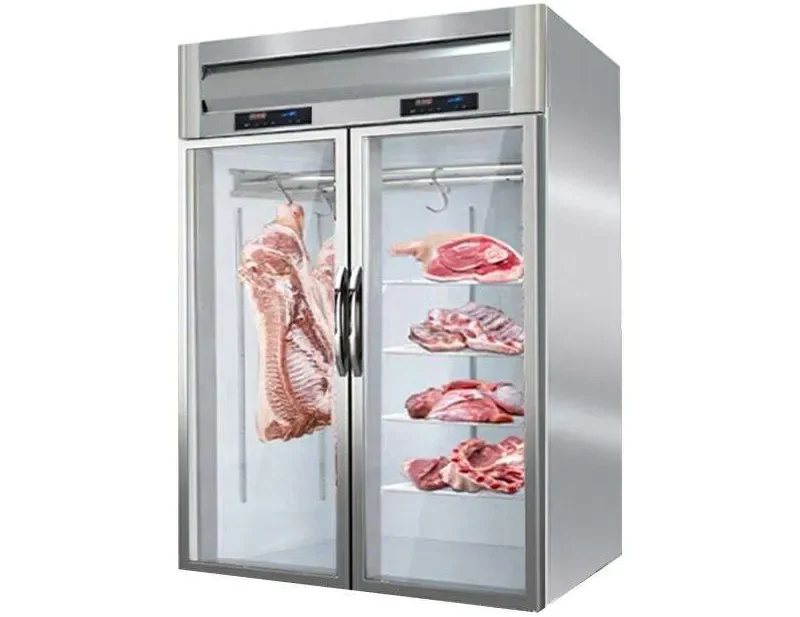
A glass door front changes the job of the unit. It turns storage into visible merchandising. Customers can see color, cut size, hanging style, and overall freshness faster. That improves customer experience, supports premium positioning, and makes the food look more valuable on the sales floor.
For meat retail, visibility matters. A cabinet that cools well but hides the product may protect stock, yet it does not always help conversion. A front-facing showcase or hanging display makes it easier to present fresh meat, premium cuts, and seasonal offers in a clean and professional way.
This is why many buyers want a meat hanging display cabinet instead of a plain cold room or solid-door fridge. They want to keep the meat at the right temperature while also turning the cabinet into part of the selling system.
In commercial meat retail, stainless steel is more than a nice finish. It helps with cleaning, corrosion resistance, and long service life in wet, cold, high-use environments. Buyers who run butcher shops, deli counters, or busy meat departments usually prefer stainless steel construction because it supports hygiene routines and stands up better to daily handling.
Senlisi highlights copper tube cooling, thickened meat hanging rods, and a thickened foam layer on its dual temperature model. Those are practical features, not decoration. Strong rods matter when heavy cuts are hanging all day. Good insulation matters when the cabinet door opens often. Efficient cooling matters when the cabinet must recover temperature quickly after service.
If your project involves heavy carcass sections or repeated loading, pay close attention to the hanging system. Thickened rods, easy-clean interiors, and stable structural support are more important than a long feature list. In real operations, durability and reliability are what keep service smooth.
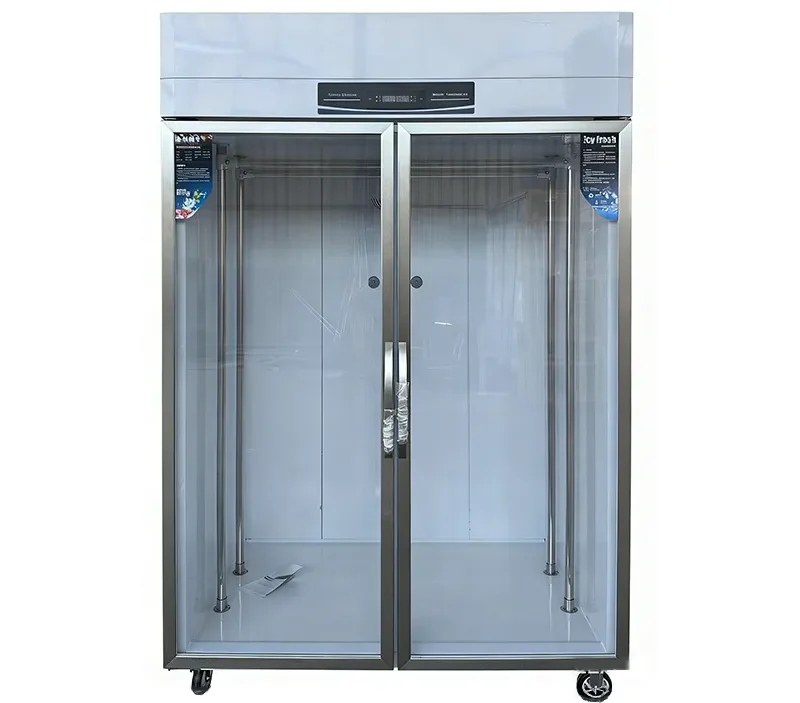
The strongest fit is for butcher shops, meat departments, fresh counters, hotel supply kitchens, premium grocers, and some foodservice operations. Senlisi itself positions its meat hanging cabinets for butcher shops, supermarkets, and catering stores, while its broader company profile targets global B2B buyers in retail, hospitality, healthcare, and institutional sectors.
A supermarket may use this type of unit for visible premium cuts and seasonal selling. A butcher can use it for stronger visual presentation and easier cut separation. A hotel or catering group may use it to combine front-of-house display with back-of-counter access. In all cases, the cabinet becomes part of the store’s commercial meat strategy, not just part of its cold chain.
If you are looking at broader commercial meat processing equipment, this cabinet may sit alongside prep rooms, cold rooms, thaw rooms, packaging stations, and display cases. It is not a full processing line by itself. It is the visible, customer-facing part of the cold merchandising system.
This is where Senlisi has a clear advantage. The company says it offers customization for voltage, size, branding, and exterior finish, with exports to 70+ countries and broad product coverage for commercial refrigeration. Its factory page also stresses in-house production, testing, and quality inspection.
For a meat hanging project, the most useful items to customize are usually:
Ask about service details too. If your team loads whole cuts, you may need stronger rods. If the project is export-based, ask how the unit is shipped on pallet or packed for FCL. If your site runs special power conditions, discuss 220v or other local standards before production starts.
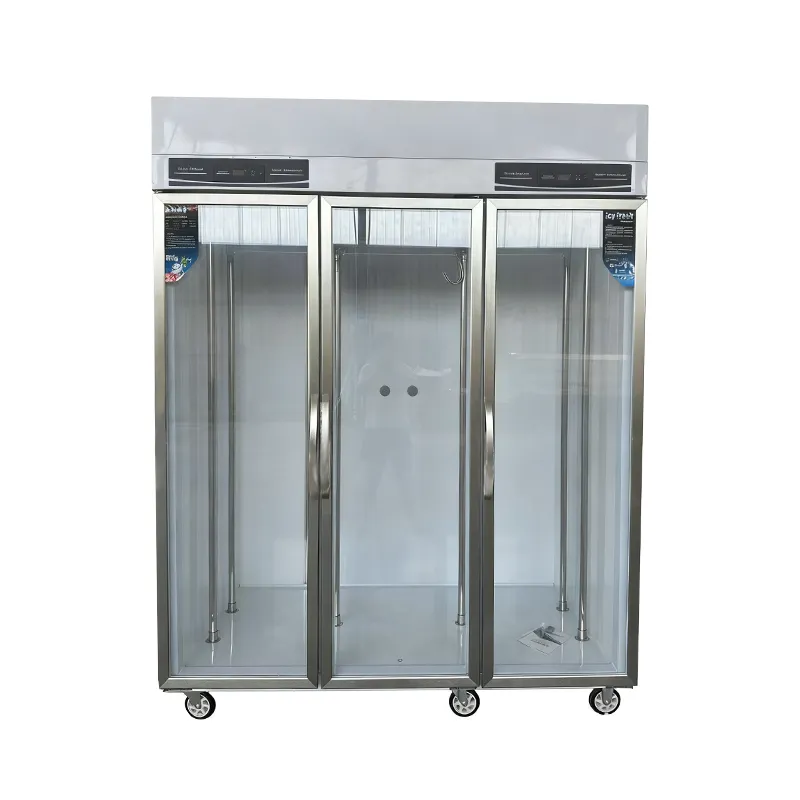
Senlisi presents itself as a Qingdao-based manufacturer and exporter with a full commercial refrigeration line. The company states it has 20+ years of experience, an 8,000㎡ factory, 400+ units daily capacity, exports to 70+ countries, and supports CE, RoHS, and ISO-related documentation. It also highlights in-house metalworking, PU foaming, assembly, performance testing, remote inspections, and third-party audits.
That matters for B2B buying because a meat cabinet project rarely stands alone. Buyers often want matching refrigeration products, project-level support, stable OEM production, and export-ready documentation. Senlisi’s site shows meat hanging cabinets as part of a much larger commercial refrigeration range, which is useful for distributors and project buyers who prefer one supplier for multiple product groups.
If your goal is a dependable commercial meat display solution with factory support, Senlisi is worth shortlisting. If your goal is a more advanced dry-curing or aging program, it is still worth asking the supplier how far the cabinet’s control system can be configured for your product and process.
Not always. A dual temperature hanging cabinet is mainly a display and holding solution. A true dry aging cabinet often needs more precise humidity, airflow, and process control for aging programs. Dry-aging guidance commonly focuses on temperature, relative humidity, air flow, and aging time, not just cold storage.
For general retail food holding, the FDA Food Code uses 41°F / 5°C or less as the modern cold-holding standard. That does not replace a validated curing process, but it is the basic reference point for refrigerated food safety.
You can use one cabinet for multiple meat categories only if the cabinet’s control system and your process requirements truly match. Fresh display is one job. Dry aging is another. Fermented or dry-cured products like salami may need tighter humidity and safety validation than a standard display unit provides.
Because commercial refrigeration projects need more than a low price. They need production consistency, export packaging, documentation, customization, and technical matching. Senlisi says it builds products in-house and supports testing, audits, and project customization, which is valuable for distributors and chain buyers.
Yes. If your goal is a real curing or aging program, ask early. Terms in your keyword brief such as probe, control system, touch screen, and haccp show that serious buyers care about process control, not just cabinet size.
2026-10
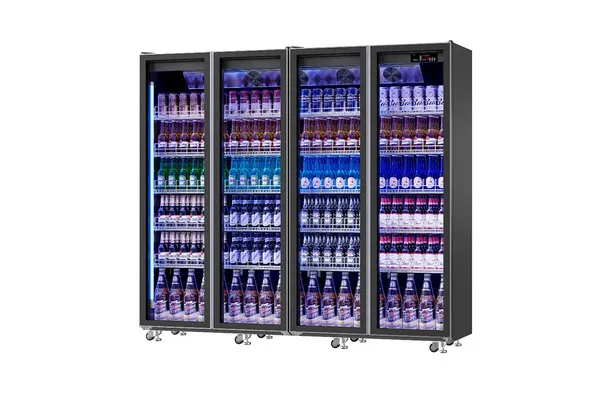
Compare bar coolers, back bar and undercounter designs, beer temperature needs, glass door…
2026-09
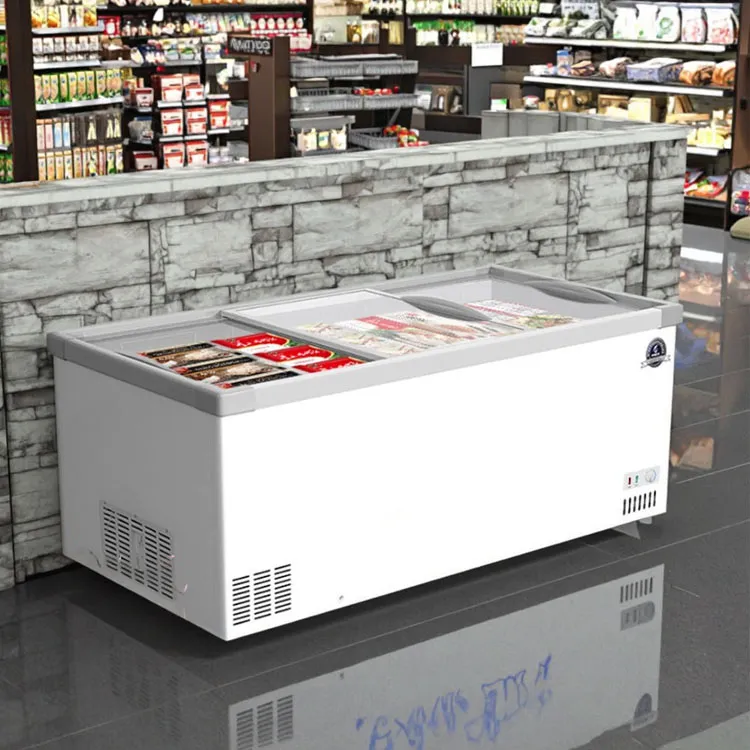
The SLS-ZD1860 Combo Island Cabinet measures 1860 × 810 × 800 mm and lists a temperature r…
We will reply you within 24 hours. If for urgent case, please add WhatsApp/WeChat: +8617806295551. Or call +8617806295551/+8617660987312 directly.
*We respect your confidentiality and all information are protected.
We will only use your information to respond to your inquiry and will never send unsolicited emails or promotional messages.