






How to Choose a Commercial Back Bar Cooler or Glass Door Beverage Refrigerator
Compare bar coolers, back bar and undercounter designs, beer temperature needs, glass door…
 11:26
11:26 When chilled products warm up too fast, sales drop and waste climbs. An outdated cabinet can also raise energy consumption and make restocking harder. A well-designed air curtain refrigerator solves that by improving product presentation, cooling stability, and daily operating efficiency.
A refrigerated fresh air curtain cabinet is an open or semi-open merchandiser that uses controlled airflow to keep cold air inside the display zone while giving shoppers easy access to drinks, dairy, fruit, and prepared foods. In practice, it helps refrigerate products for self-service sales while supporting strong product visibility, faster grabbing, and better merchandising in supermarkets and convenience stores.
An air curtain refrigerator is a display cabinet that uses a moving air stream to create a cooling barrier across the front opening. In simple terms, the unit sends chilled air down the front, helps recirculate it through the case, and keeps products cold without fully blocking customer access. That is why this type of refrigerator is often called an open-air merchandiser or refrigerated air curtain display. Research on open refrigerated display cases shows that air curtain performance plays a major role in temperature stability and infiltration control.
The Senlisi cabinet is positioned as an integrated air curtain solution for supermarket refrigeration and preservation. The states a temperature range of 2℃–8℃, copper tube cooling, customizable size, and application for milk, ingredients, and fruit. It also highlights natural air defrost and an oversized evaporator for stronger heat exchange.
From a practical buying angle, I see this as a smart format for stores that want quick access and clean presentation. It is built for grab-and-go retail, where visibility, accessibility, and fast restocking matter as much as cold storage itself. Senlisi also lists Air Curtain Cabinets among its core product categories, which shows this is part of a broader commercial line rather than a one-off model.
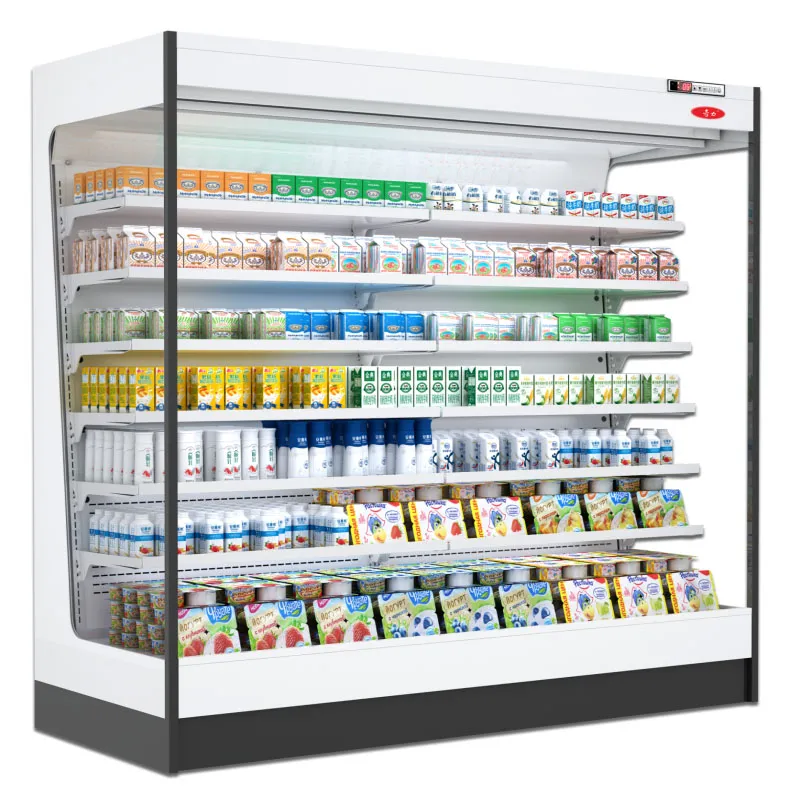
A front-open cabinet supports faster shopping behavior. Customers can reach products without pulling a heavy glass door, and staff can refill the display more quickly during peak hours. That improves self-service, reduces friction, and makes the product display more inviting. Open display merchandisers are popular because they combine merchandising with speed.
This matters most in supermarkets, deli zones, and convenience stores where chilled drinks, dairy, fruit cups, and ready meals move fast. A tall merchandiser with good product visibility can support more impulse purchases than a closed storage box. Senlisi specifically frames this model for supermarket refrigeration and preservation, which matches the open-access, front-of-house use case very well.
There is also a layout benefit. An open front cabinet can keep traffic moving better than some door-based cases in high-volume aisles. For many retailers, that means better merchandising, easier stock rotation, and stronger shelf appeal. The trade-off, of course, is that open cases depend heavily on good air flow control to manage cold and warm air interaction.
This is the heart of the design. The air curtain system uses a controlled air stream to separate the cool space inside the cabinet from the warmer store environment. You can think of it as an invisible barrier. The air curtain acts like a moving wall between the case and the room, helping reduce entry of hot air and manage exposure to ambient air. Studies of open refrigerated cases show that infiltration from surrounding air is one of the biggest thermal loads in this type of equipment.
In many designs, there is both an outer air curtain and an inner air curtain. The idea is to guide cool air down the front, collect it near the return air intake, and recirculate it through the cooling path again. This air management affects uniformity, thermal performance, and how well the unit handles customer traffic. When the airflow is weak, uneven, or too turbulent, temperature control gets harder.
That is one reason Senlisi emphasizes an oversized evaporator and efficient cooling design. The larger evaporator improves heat exchange and speeds temperature pull-down, while the natural air defrost system helps maintain stable internal temperatures with lower power use.
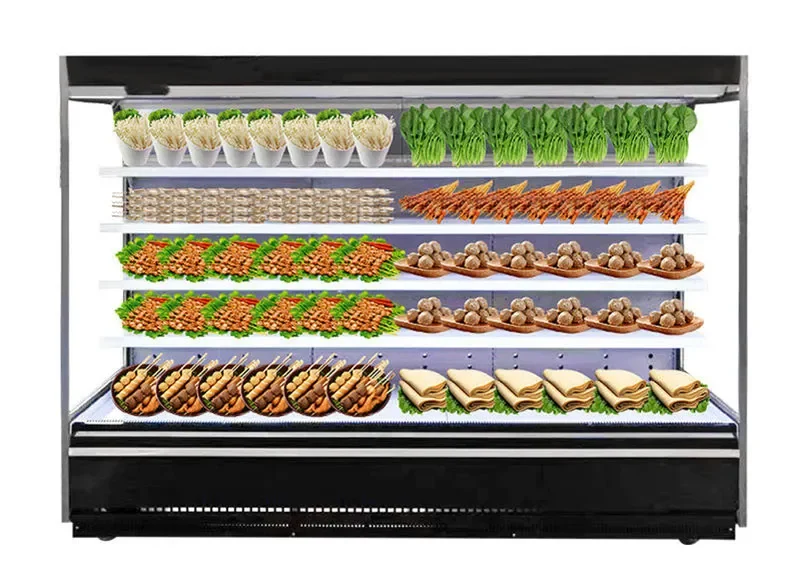
A refrigerated display can look cold without being consistently cold. That is the danger. Products at the front, top, or near the edge of the air curtain may warm faster if the air distribution is poor. Research on open vertical display cases shows that infiltration and curtain characteristics strongly affect temperature performance and stability.
Good airflow improves uniform temperature distribution. It helps keep milk, fruit cups, drinks, and other cold food within the intended zone instead of creating hidden warm pockets. It also improves the customer experience because the display stays clean, open, and easy to shop. In other words, better air management supports both product quality and sales.
I always tell buyers to ask how the unit handles vertical air circulation, not just the setpoint. A case with better air flow recovery usually performs more reliably in real stores, especially where doors open often nearby, foot traffic is heavy, or the room has frequent changes in ambient conditions.
A good cabinet is only as strong as its cooling system. The compressor, condenser, evaporator, and the defrost strategy shape the real-life performance of the whole unit. Senlisi highlights copper tube cooling, an oversized evaporator, and natural air defrost as core product details for this model.
Those details matter because they influence efficient cooling, long-term durability, and product stability. A stronger evaporator can improve heat exchange. A reliable compressor helps the refrigerator recover after stocking or frequent customer access. A clean defrost design supports airflow and lowers frost-related efficiency loss over time. ORNL and other technical sources note that open display case load is highly sensitive to infiltration and cooling demand, which puts extra importance on the refrigeration circuit.
Construction details matter too. Buyers may want stainless steel trim, a stainless steel door on certain variants, or a tempered glass door version where climate or operating style requires extra enclosure. Senlisi also states that size, color, and style are customizable, which is useful when a project needs a specific configuration for brand image or aisle planning.
Buyer checklist for critical components

Not always. It depends on the use case. An open display or doorless air curtain refrigerator gives faster access and stronger impulse selling, which is why it is popular in drink, dairy, and ready-food zones. But open models also interact more with room air, so their performance depends more on the quality of the air curtain and store conditions.
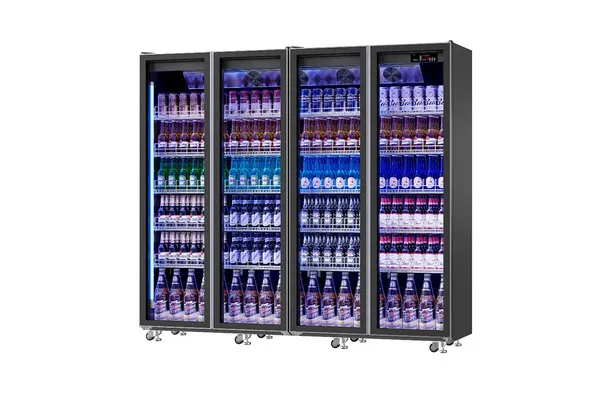
A glass door format can reduce warm-air infiltration and often improve energy efficiency, especially in stores with long operating hours. That is one reason many retailers compare open-front models with glass door merchandisers before choosing a layout. If your top priority is easy access, open air curtain design often wins. If your priority is energy control in a tough environment, a door-based case may deserve a closer look.
For many operators, the answer is mixed deployment. Use open-front air curtain display where grab-and-go speed matters most, and use closed-door units in slower, more temperature-sensitive zones. Senlisi’s wider product range supports this strategy because the company also offers beverage coolers, upright freezers, commercial refrigerators, and worktops across different use scenarios.
Energy matters because refrigeration runs all day. The certified commercial refrigerators and freezers can reduce annual electricity use and lower utility costs over the equipment lifetime. Even though open display cases are a special category, the general lesson still applies: efficient design pays back over time.
For air curtain cases, operational energy depends heavily on infiltration, room conditions, and cooling recovery. ORNL research notes that open refrigerated display cases carry a large load from entrained room air in the air curtain, so better air management can directly support energy savings. That is why the quality of the air curtain, the case geometry, and the cooling system all matter.
Senlisi’s product energy-saving benefits through the oversized evaporator and eco-friendly natural air defrost. Those design choices can help lower power use while still maintaining stable internal conditions. For global buyers, this is where energy efficiency becomes a sales and operating advantage, not just a technical spec.
Imagine a medium-size grocery store launching a fresh snack wall. The owner wants chilled yogurt, milk drinks, fruit boxes, and ready meals in one high-visibility section. A closed refrigerator works, but customer flow slows down. An open air curtain refrigerator improves accessibility and supports more impulse buys.
Now imagine the same store in a hotter environment with stronger ambient heat load. In that case, the buyer may need a stronger cooling package, better store HVAC support, or a different open/closed case balance. This is exactly why I treat air curtain refrigeration as a design decision, not just a product purchase. The best answer depends on how the case will actually operate on the floor.
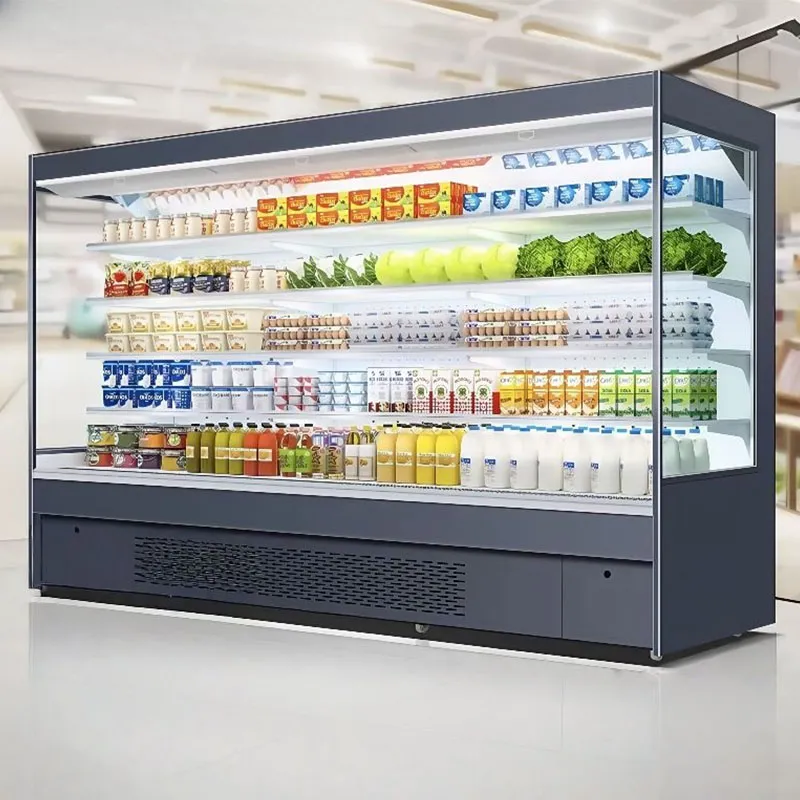
A refrigerated fresh air curtain cabinet is one of the most effective tools for modern chilled merchandising when the goal is speed, strong product visibility, and reliable day-to-day refrigeration. It helps refrigerate food in a shopper-friendly format, supports self-service, and can improve aisle performance when the air curtain is properly designed.
The key is to look beyond appearance. Ask about airflow, cooling components, defrost, temperature stability, customization, and energy behavior in real operating conditions. If you do that, you will make a better buying decision. For global B2B buyers looking for a customizable supermarket display solution, Senlisi’s SLS-FMY1200 offers a strong starting point.
An air curtain refrigerator is a refrigerated display cabinet that uses a controlled stream of cold air across the front opening to help keep products cool while allowing open customer access.
Because airflow controls how well the unit blocks warm-room infiltration and keeps product temperatures even. Poor air management can reduce uniform temperature distribution and raise the thermal load.
Usually not in all conditions. Closed-door models often have an energy advantage, but open air curtain cabinets can perform very well for fast-moving retail where accessibility and sales lift are important.
It is suitable for refrigerating milk, ingredients, and fruits in supermarket settings, with a 2℃–8℃ operating range and customizable size, color, and style.
Ask about size, layout, configuration, refrigerant options, temperature range, customization, packaging, and certification for your destination market. Those details matter as much as the headline price.
2026-10
Compare bar coolers, back bar and undercounter designs, beer temperature needs, glass door…
2026-09
The SLS-ZD1860 Combo Island Cabinet measures 1860 × 810 × 800 mm and lists a temperature r…
We will reply you within 24 hours. If for urgent case, please add WhatsApp/WeChat: +8617806295551. Or call +8617806295551/+8617660987312 directly.
*We respect your confidentiality and all information are protected.
We will only use your information to respond to your inquiry and will never send unsolicited emails or promotional messages.